Client & Business
Companies working with HVAC and engineering systems for smart homes, where it is important to demonstrate the internal structure of equipment and utilities.
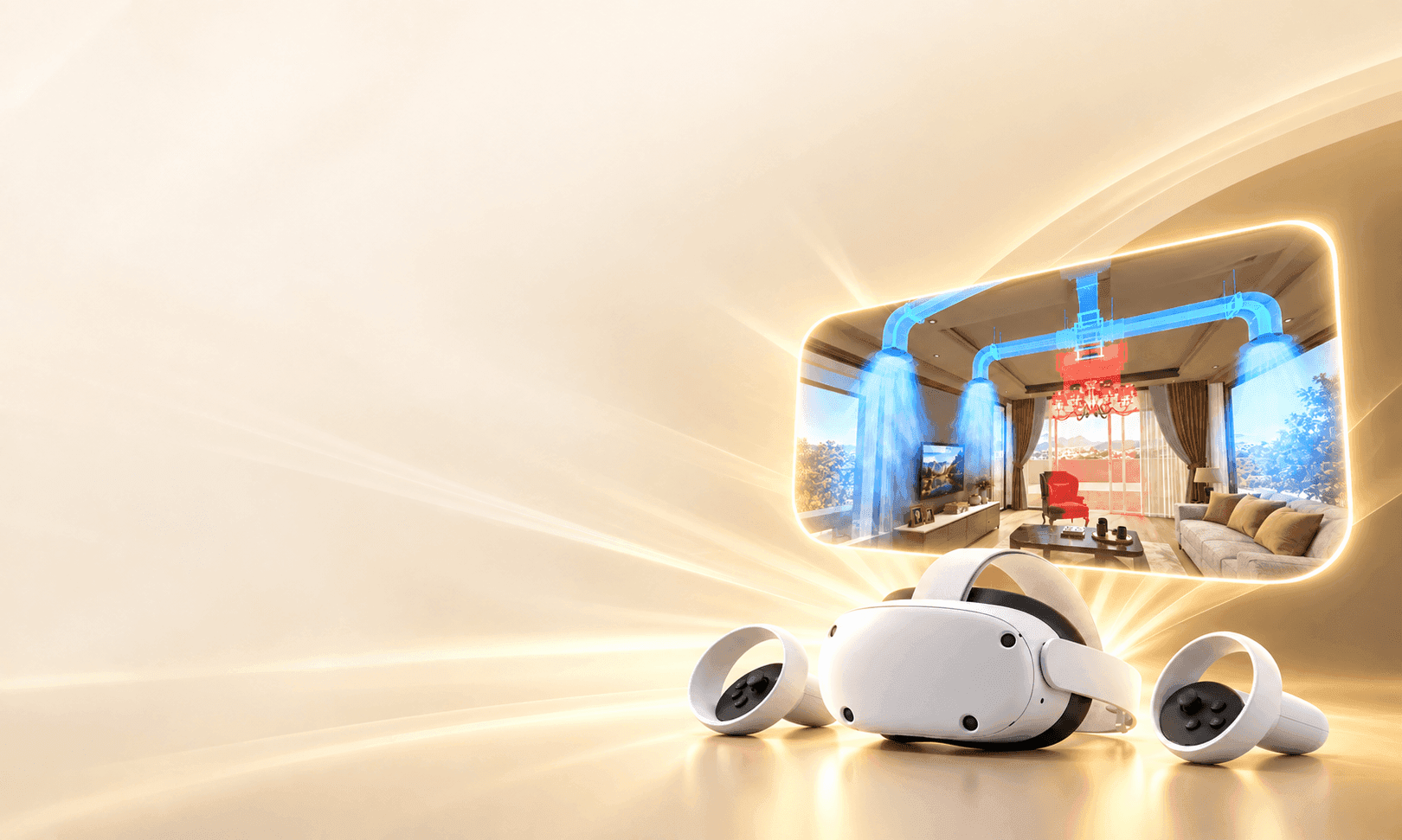
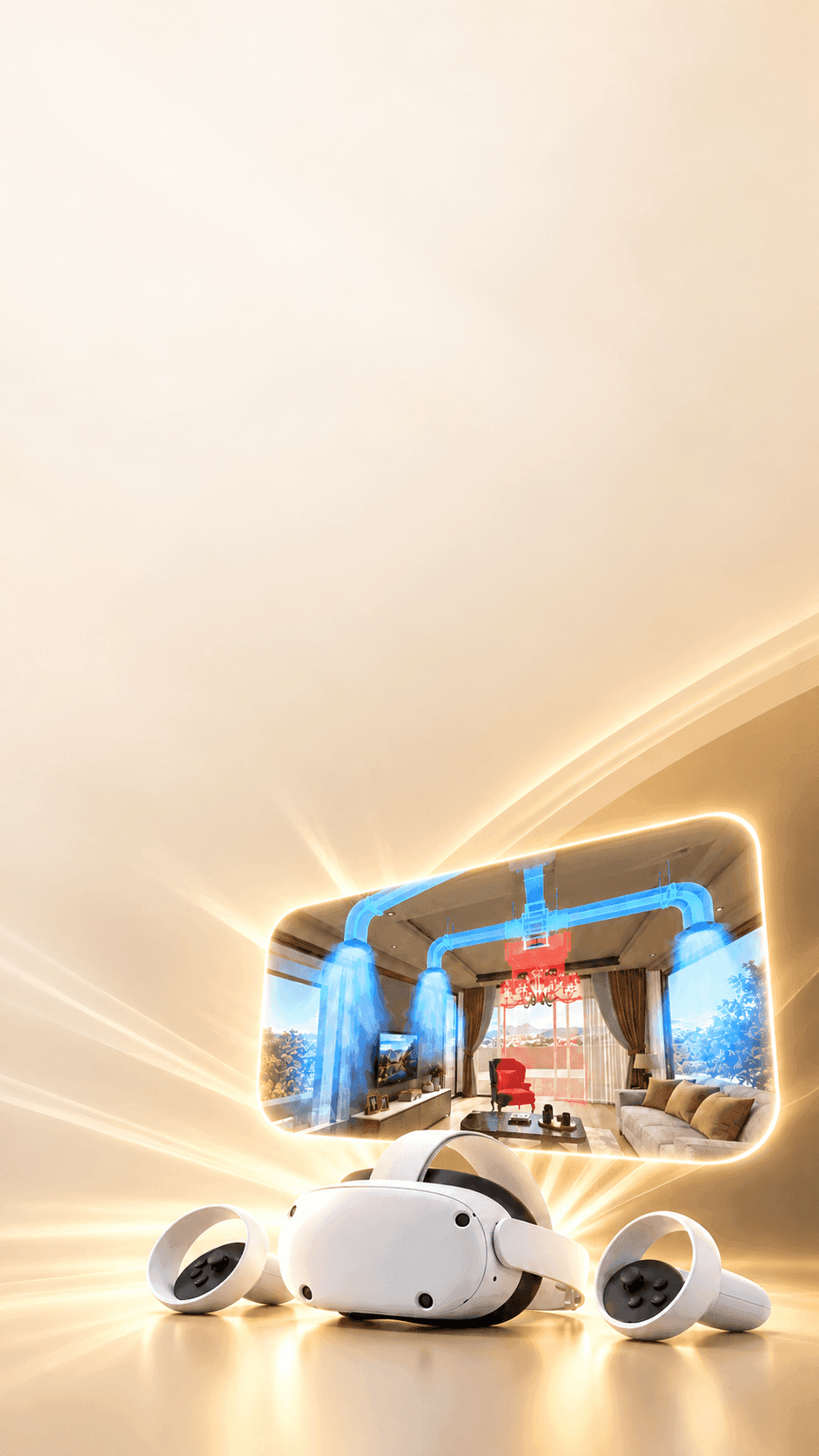
Developed a VR scene that demonstrates the hidden cooling and heating infrastructure inside a smart home.
In smart homes, air conditioning is more than just visible units. Much of the tubing and piping is hidden inside the building structure. The VR project makes it possible to clearly demonstrate how the full system runs through the home and how cooling and heating operate.
Companies working with HVAC and engineering systems for smart homes, where it is important to demonstrate the internal structure of equipment and utilities.
Show users how the entire cooling and heating system works, including hidden tubing and pipelines that cannot be directly seen after installation.
Created a detailed VR visualization of the home air conditioning system, revealed hidden tubing and pipelines, and added audio to make the experience more realistic.
Users can see the full structure of the climate system and understand how it works even when the real utilities are hidden inside the building.
The project included engineering system modeling, development of the home VR environment, visualization of hidden utilities, audio setup, and preparation for HTC Vive Cosmos.
Identified the key problem: once installed, the system’s tubing and pipelines become hidden, making them difficult to explain or demonstrate in a real building.
The scenario was structured around demonstrating the complete path of the climate system inside the home, from visible components to hidden utilities.
Designed the virtual room and engineering component layout so users can follow the operation of the entire system step by step.
The VR project was developed in Unreal Engine 5, with 3D content created in Blender. HTC Vive Cosmos was used as the target headset.
Tested the visualization of the engineering system, hidden components, and audio playback within the VR experience.
Tell us about the project — we will break down the task and propose an implementation approach.
Defining goals, studying the audience, forming requirements and setting tasks. This helps to understand what the business needs and what results are expected.
Creating the solution architecture, thinking through user scenarios, interfaces and logic. At this stage the 'framework' of the future product is formed.
Programming the server and client parts, connecting databases, integrating with external services. This is where the idea turns into a working product.
Checking functionality, performance, compatibility and security. Fixing bugs before the product reaches users.
Deploying the product (for example, publishing in stores or launching on servers), configuring the environment and starting marketing or internal processes.
Updating functionality, adapting to new business tasks, fixing bugs and keeping the product up-to-date.
The project made the hidden engineering system visible and allowed the operating principle of the air conditioning equipment to be demonstrated in a realistic virtual environment.
The user can see utilities typically located within walls and structures.
VR helps clearly explain the connections between cooling, heating, and internal utilities.
Detailed visualization and sound enhance the immersive experience.
The system can be demonstrated even after its actual components have been hidden after installation.
 01
01 02
02 03
03 04
04 05
05 06
06 07
07 08
08 09
09 10
10 11
11 12
12 13
13 14
14 15
15 16
16 17
17 18
18 19
19We build enterprise solutions using a powerful, proven, and
versatile tech stack designed for performance, scalability, and
security. Our expertise spans


















We will propose a suitable structure and prepare the first sketch of your future project — with no obligation to start development.
You get a visual concept you can discuss with your team.

He will review your project and business objective, prepare recommendations and the first sketch.
An honest conclusion.If the solution can be improved without a full rebuild, we will tell you so.