Project goal
Create a managed online store that helps you choose equipment, accepts online payment and transfers the order to RHINO employees with a complete set of data.
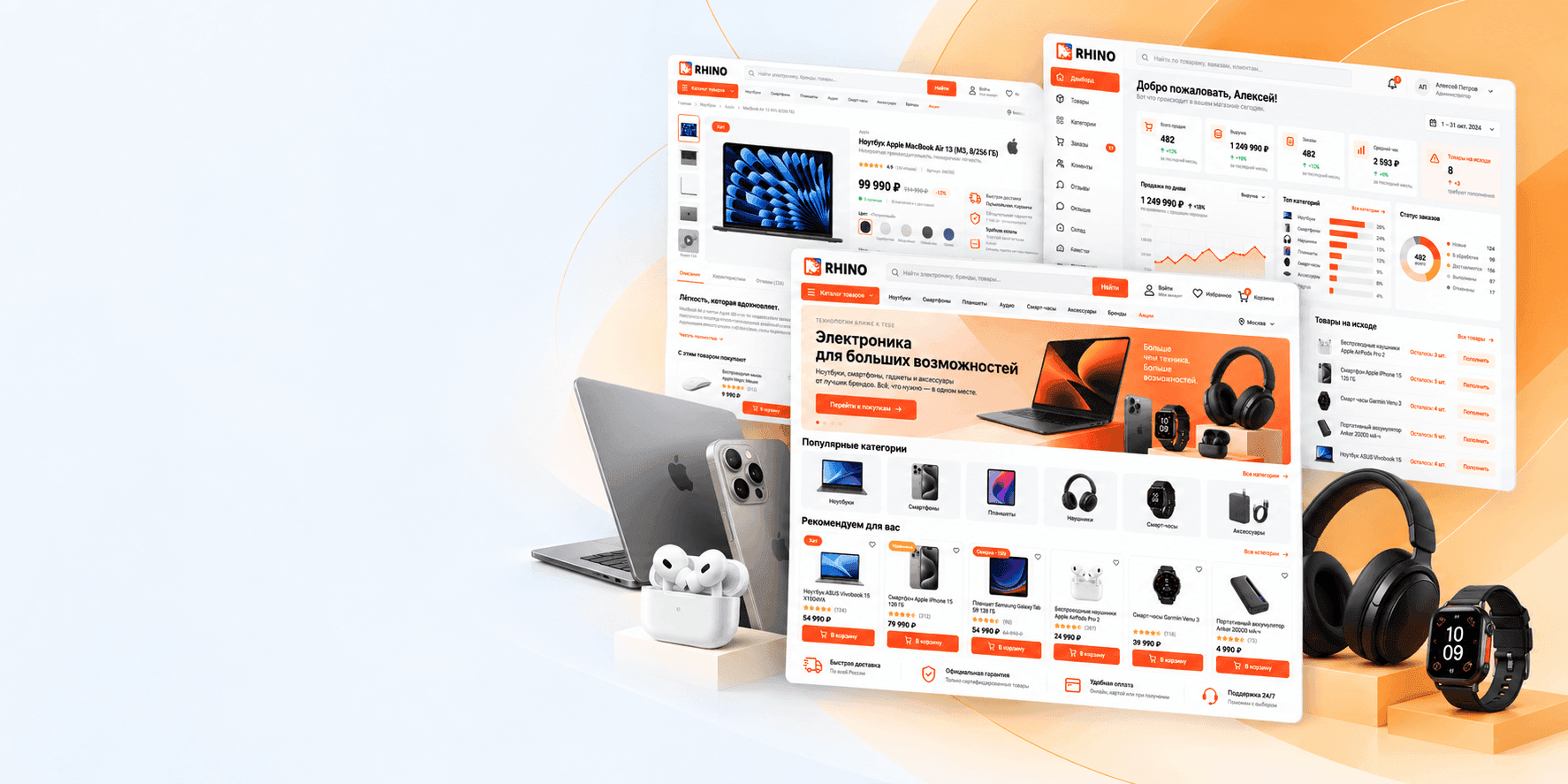
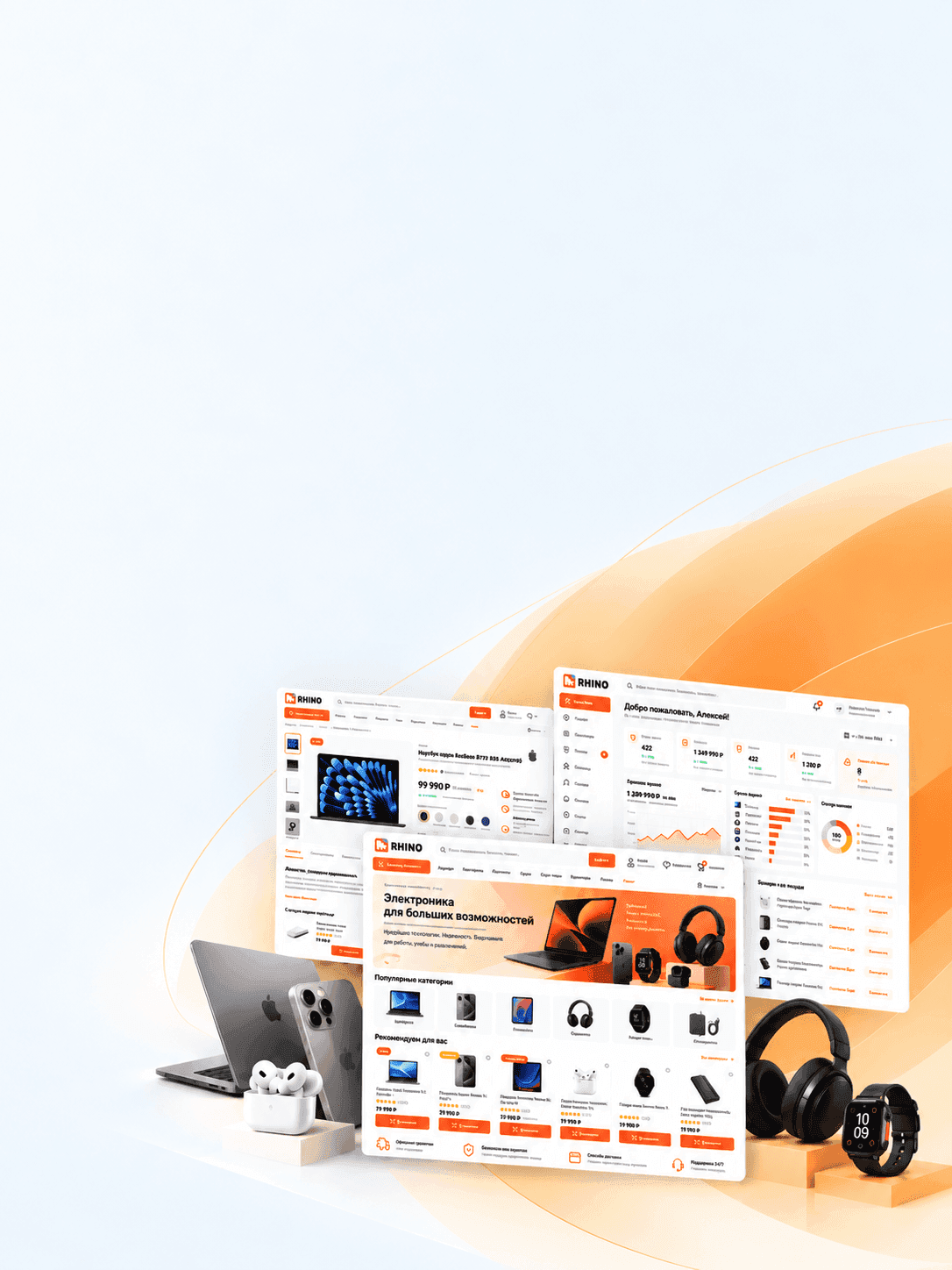
We created an online store for RHINO with a catalog of laptops, smartphones and accessories, administrative system and online payment acceptance
RHINO works with electronics: laptops, smartphones, computer peripherals and accessories. The DevSymfony team designed and created an online store from scratch - from the catalog structure and customer journey to administrative system and payment acceptance.
Create a managed online store that helps you choose equipment, accepts online payment and transfers the order to RHINO employees with a complete set of data.
The electronics store works with a large number of models, memory options, colors, characteristics and prices. The buyer needs a clear display window, and employees need a quick way to support up-to-date information
Before launching your own store, sales depended on manual communication and individual actions employees, and every change in the assortment required additional work within the team.
Product data is difficult to maintain in a single format; characteristics of different categories differ; price and availability must match what the buyer sees; After payment, the order cannot be lost between the site and processing.
Tell us about the project — we will break down the task and propose an implementation approach.
DevSymfony designed the system as a long-term platform capable of supporting different types of insurance and expanding the partner network.
Types, products, forms, tariff factors, documents and publication.
Partners, sub-partners, users, products and data isolation.
Online payment, limits, debt, commissions and accrual statuses.
Calculation, registration, statuses, payment, issue and document history
Payment services, documents, external channels, API and reporting
User accounts work on top of a single product and operational core. External systems are connected through the integration layer, and rights and auditing pass through the entire loop.
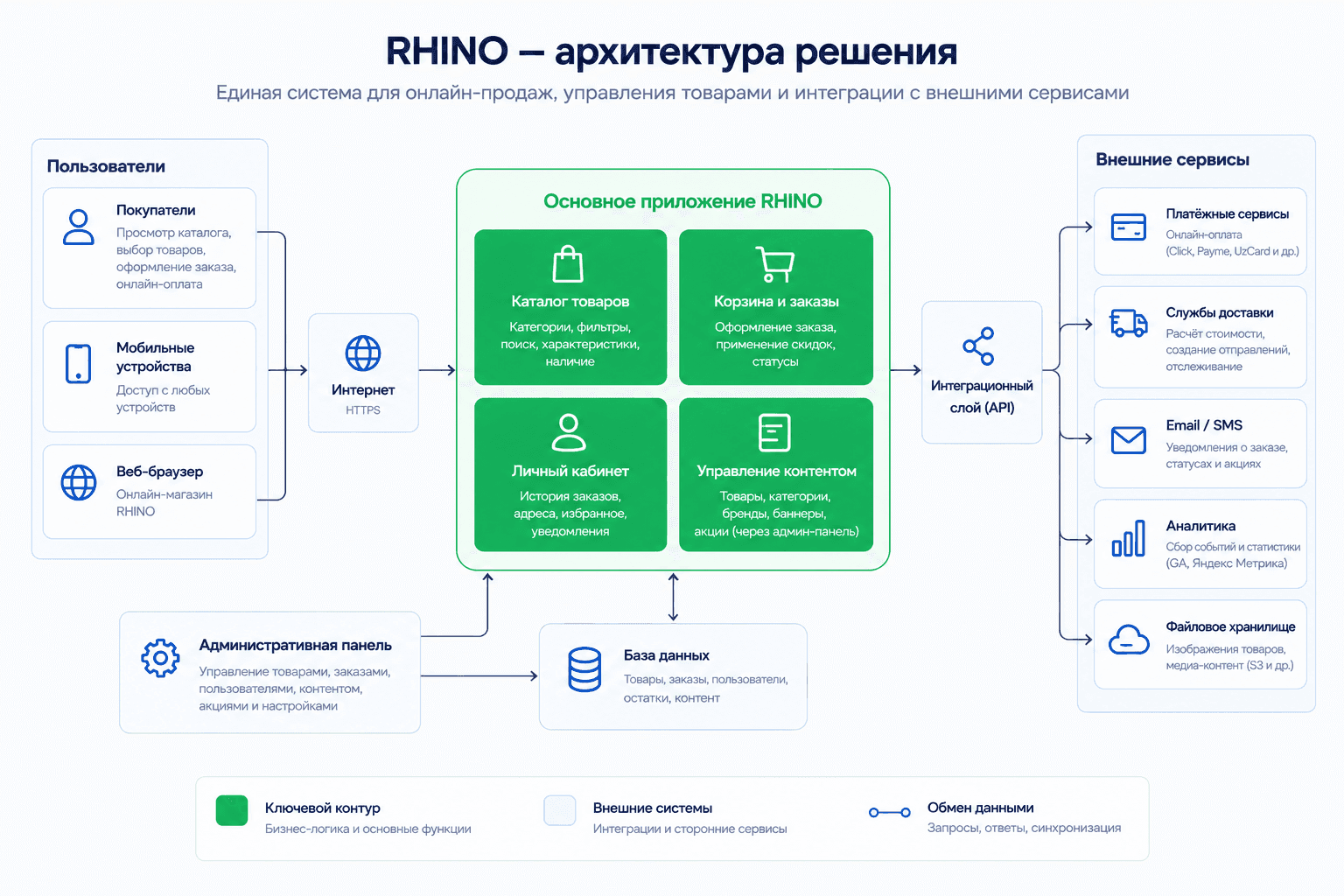
We will show how to connect interfaces, business logic, data and external systems.

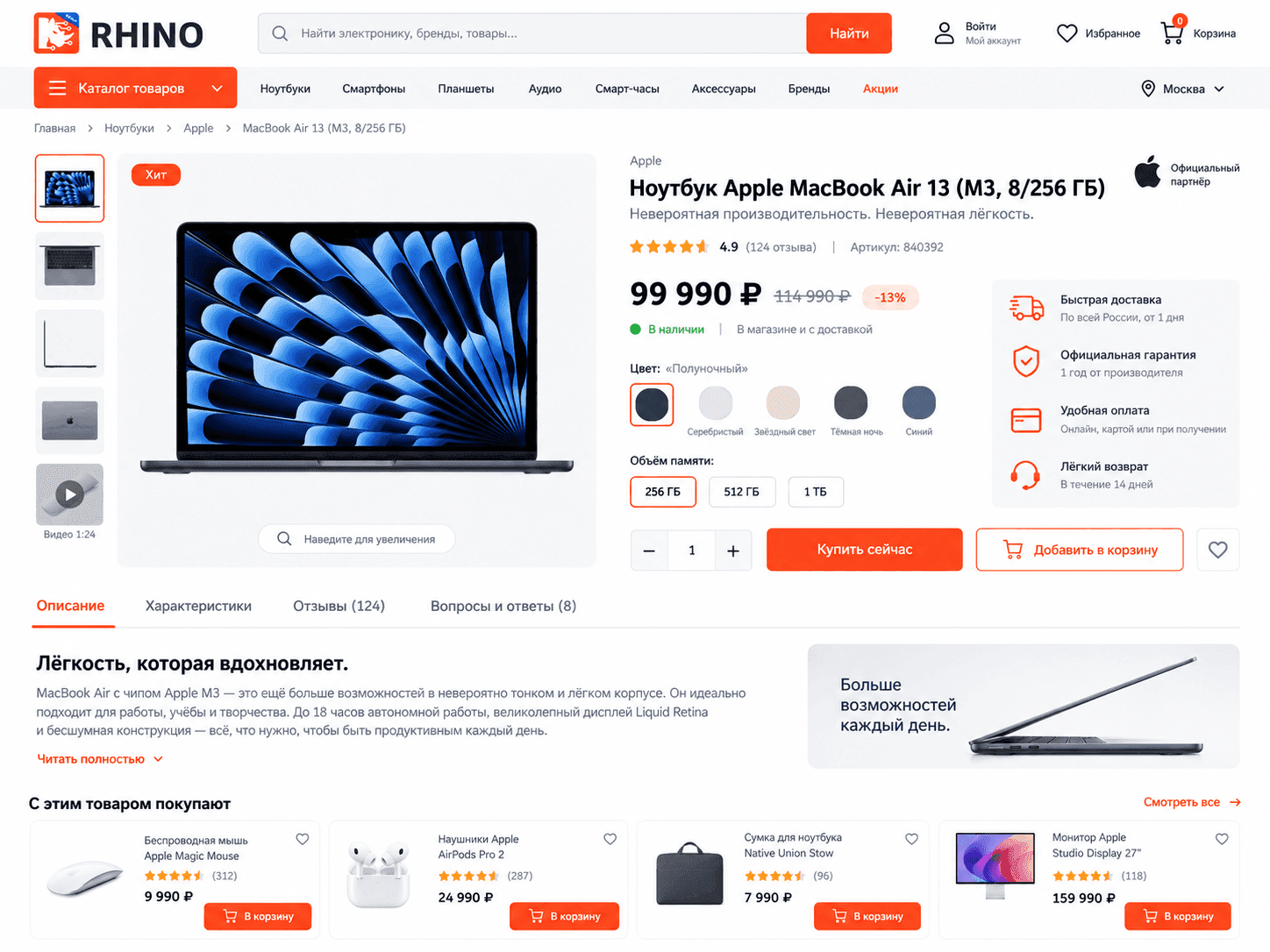
One page contains images, price, availability, options, specifications and the main purchase action. On In the image, highlight the price, option selection and add to cart button.
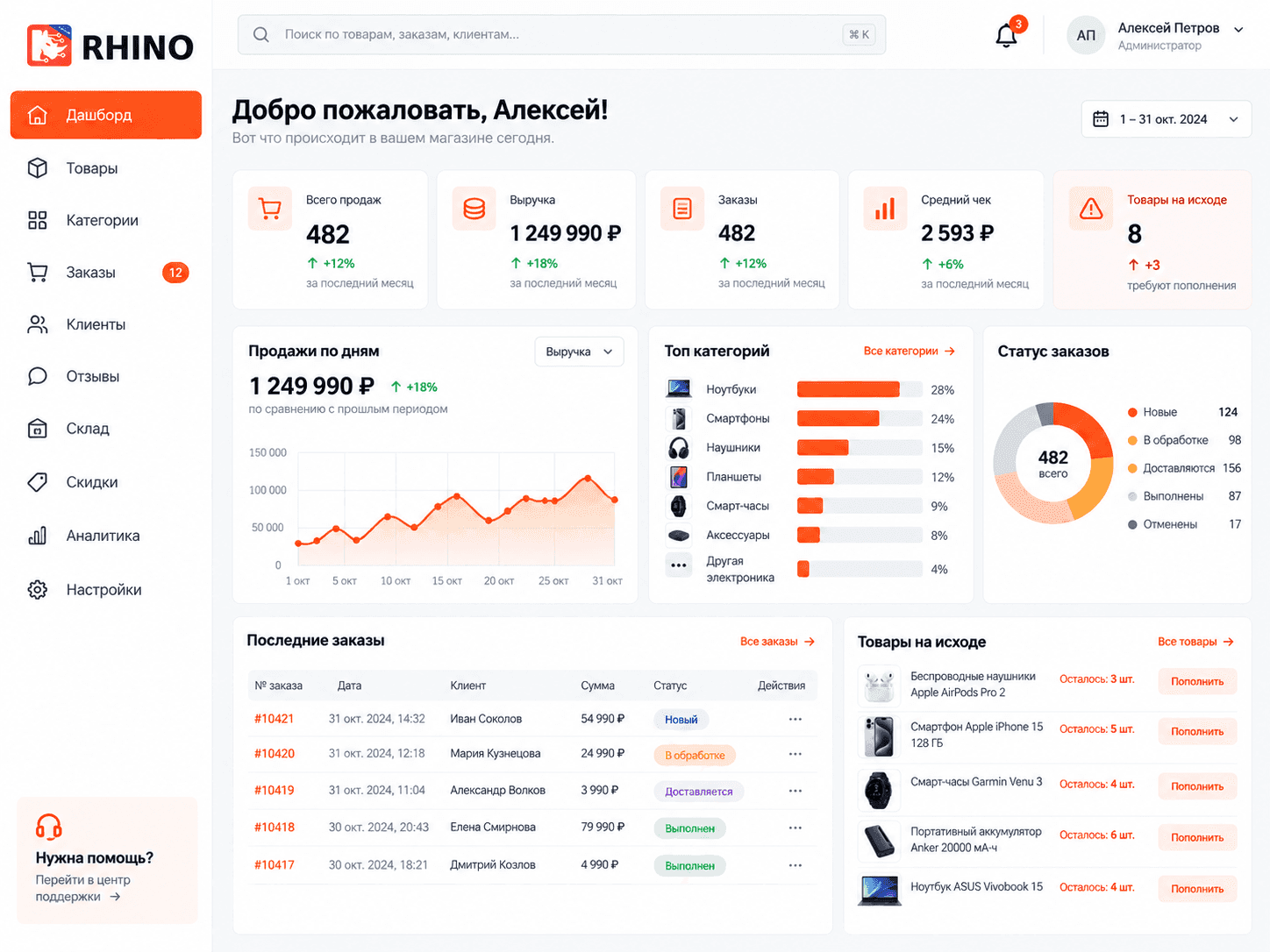
The employee searches for items, checks price, balance and publication, and then opens the desired record for editing. In the image, highlight filters, statuses and the add button.
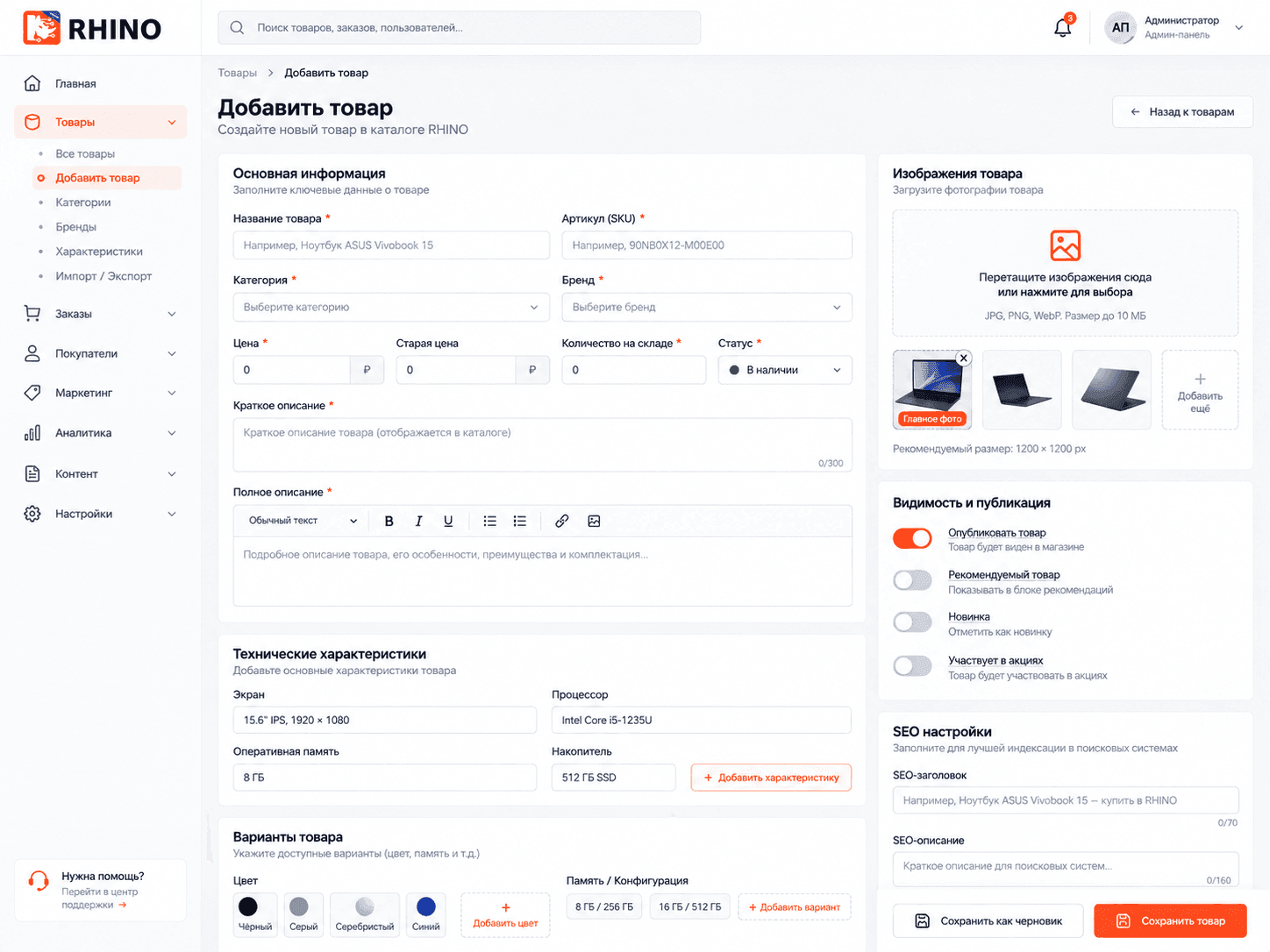
The form collects title, category, brand, description, images, price, balance and posting rules. Employee can save the draft or immediately publish the finished card.
We will analyse the functionality and build a clear interface structure.
Defining goals, studying the audience, forming requirements and setting tasks. This helps to understand what the business needs and what results are expected.
Creating the solution architecture, thinking through user scenarios, interfaces and logic. At this stage the 'framework' of the future product is formed.
Programming the server and client parts, connecting databases, integrating with external services. This is where the idea turns into a working product.
Checking functionality, performance, compatibility and security. Fixing bugs before the product reaches users.
Deploying the product (for example, publishing in stores or launching on servers), configuring the environment and starting marketing or internal processes.
Updating functionality, adapting to new business tasks, fixing bugs and keeping the product up-to-date.
After implementation, the company received its own insurance system and ceased to depend on external insurance services and their integrations.
The company stopped depending on external insurance services and received its own platform.
Insurance products, rates and parameters are now configurable within their system
Access, limits, commissions and products are managed separately for each partner.
All participants, roles and processes work according to the same rules within one platform.
 01
01 02
02 03
03 04
04 05
05 06
06 07
07 08
08 09
09 10
10 11
11 12
12 13
13 14
14 15
15 16
16 17
17 18
18 19
19We build enterprise solutions using a powerful, proven, and
versatile tech stack designed for performance, scalability, and
security. Our expertise spans



















We will propose a suitable structure and prepare the first sketch of your future project — with no obligation to start development.
You get a visual concept you can discuss with your team.

He will review your project and business objective, prepare recommendations and the first sketch.
An honest conclusion.If the solution can be improved without a full rebuild, we will tell you so.
We will propose a suitable structure and prepare the first sketch of your future project — with no obligation to start development.
You get a visual concept you can discuss with your team.
He will review your project and business objective, prepare recommendations and the first sketch.
An honest conclusion.If the solution can be improved without a full rebuild, we will tell you so.