
Task
Collect financial transactions and controls accounting period in a single interface.
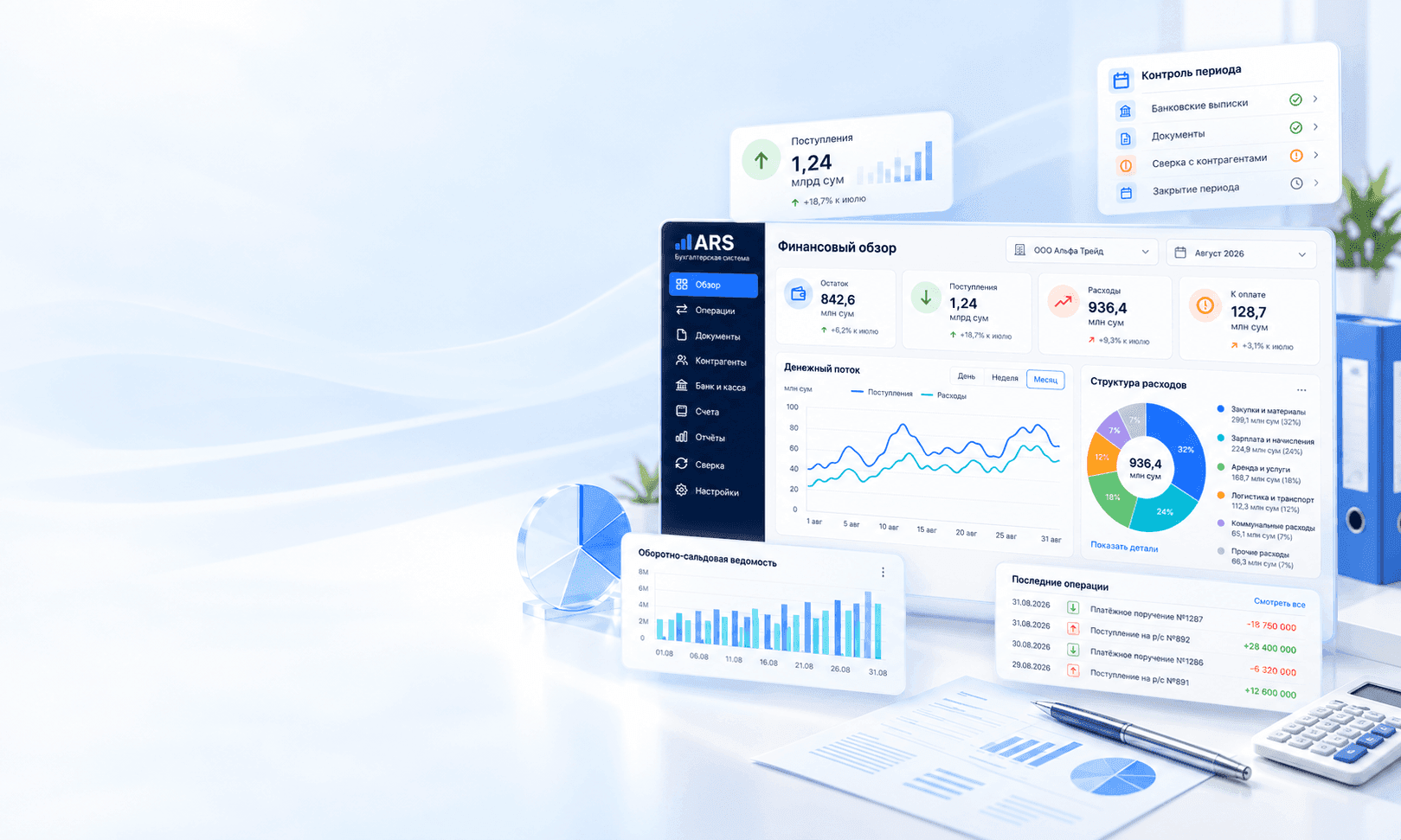
Single workspace for financial data, primary documents, calculations and period control
Collect financial transactions and controls accounting period in a single interface.
Operations, documents, counterparties, bank and cash desk, reporting and reconciliation.
Accountant, chief accountant and manager with different access level.
Traceability of the transaction from document to report and control procedures.
Accounting processes become vulnerable when transactions, documents, bank data and reports maintained in disparate files or loosely coupled tools.
Tell us about the project — we will break down the task and propose an implementation approach.
With a short initial description, this is not a list of confirmed work, but a strong product model of an accounting system.
Defining accounts, dimensions, periods and rules operations
Create, import, check, post and cancel records.
Counterparties, receivables and payables debt.
Reconciliations, errors, unfinished tasks and closure.
Turnover, balances, balance and management presentations.
The logic is built around a single financial ledger: documents create or confirm transactions, transactions generate transactions, and reports read consistent data.
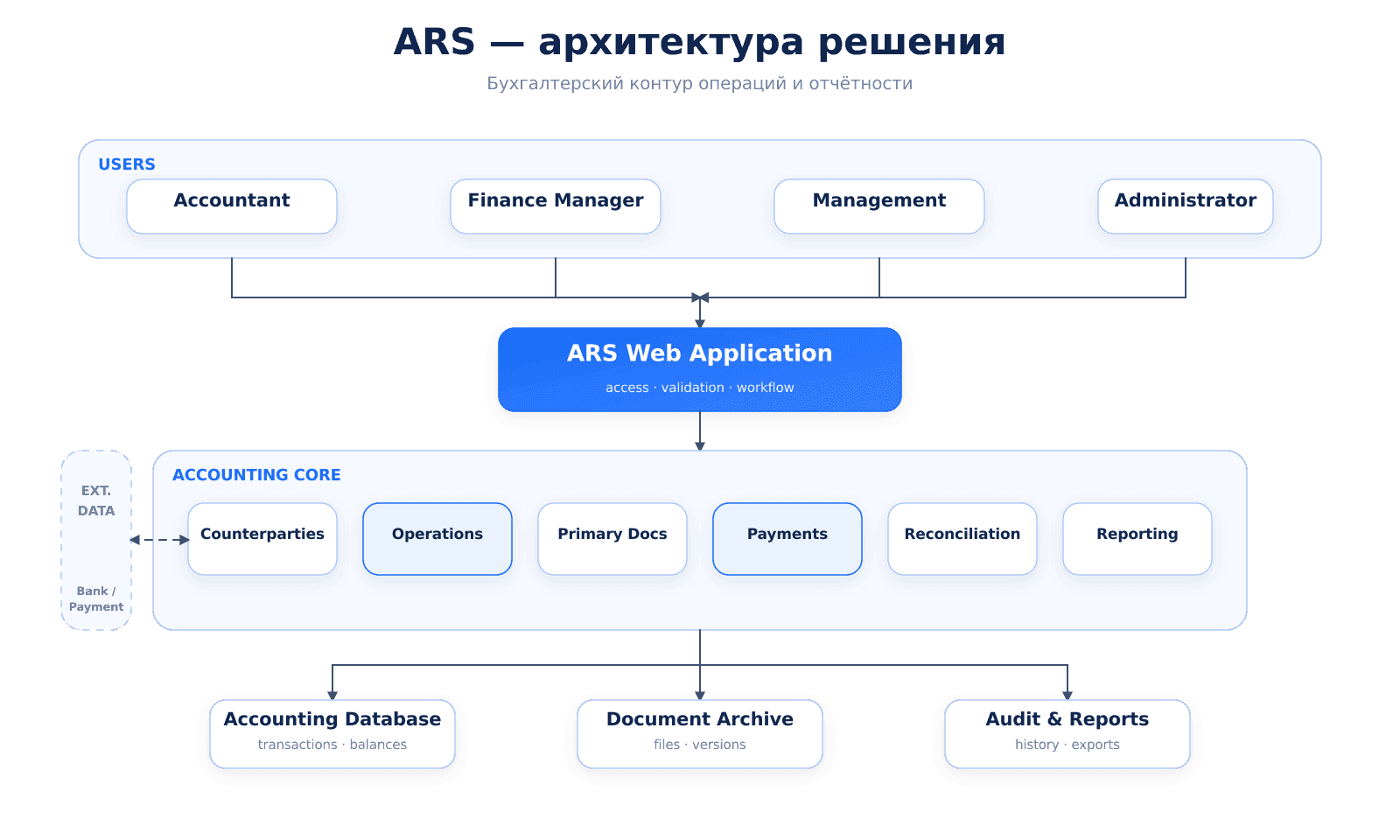
We will show how to connect interfaces, business logic, data and external systems.
The conceptual framework covers the basic operating cycle of an accounting system.
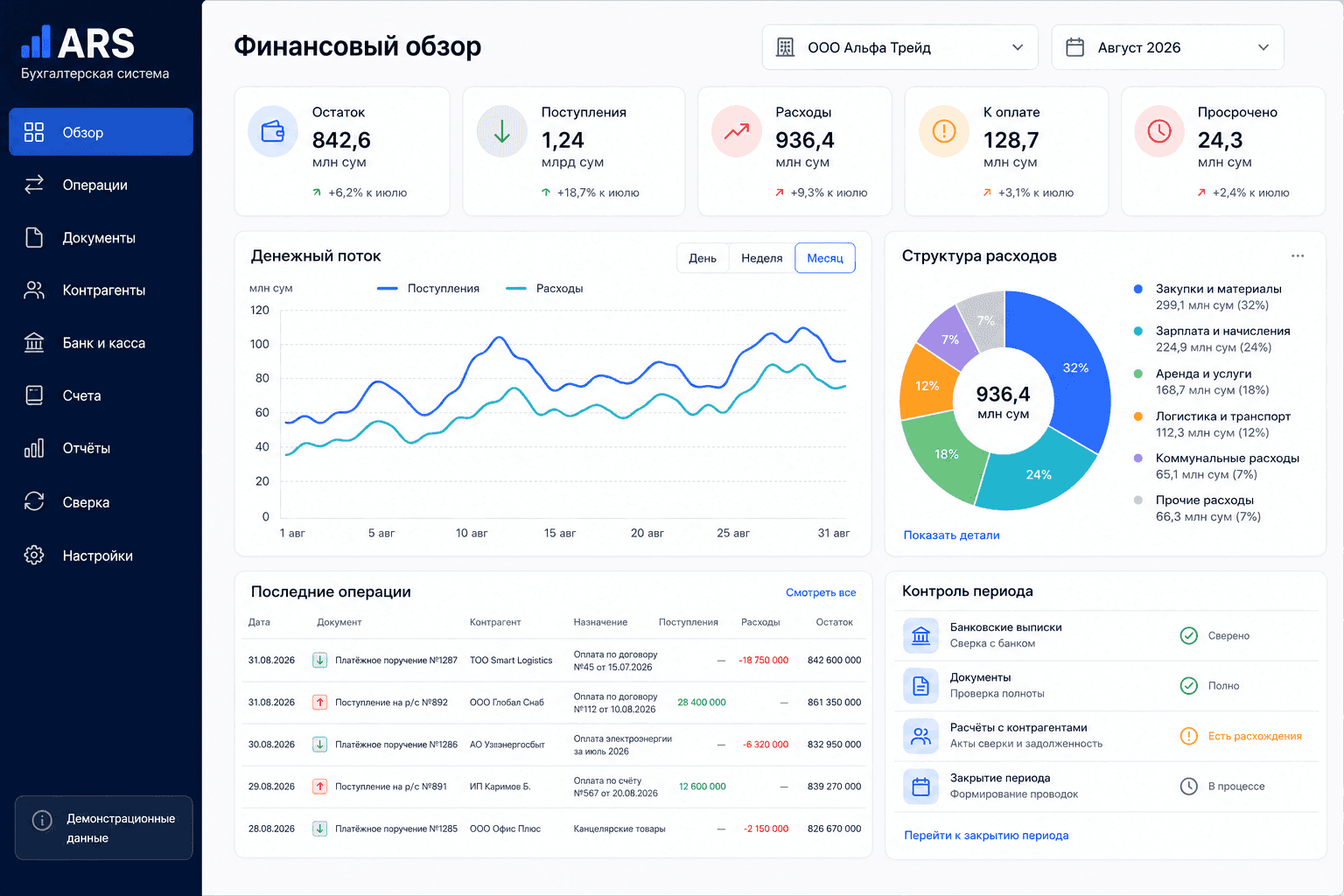
Balances, receipts, expenses, liabilities and period control
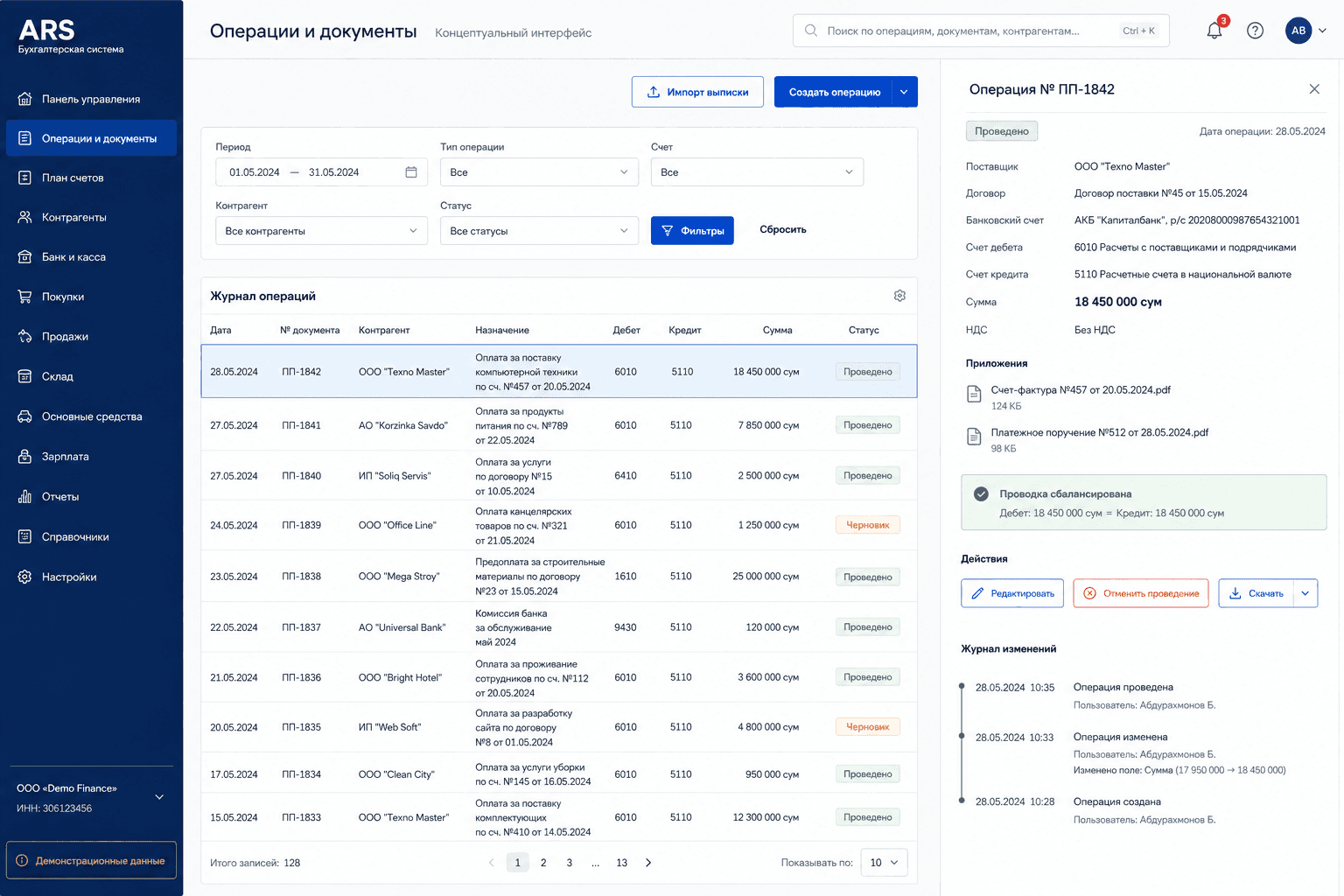
Journal, debit, credit, statuses and change history
Files, details and link to financial record
Agreements, debt and mutual settlements.
Statement import, payments and bank reconciliation.
Turnovers, balances, discrepancies and closing tasks.
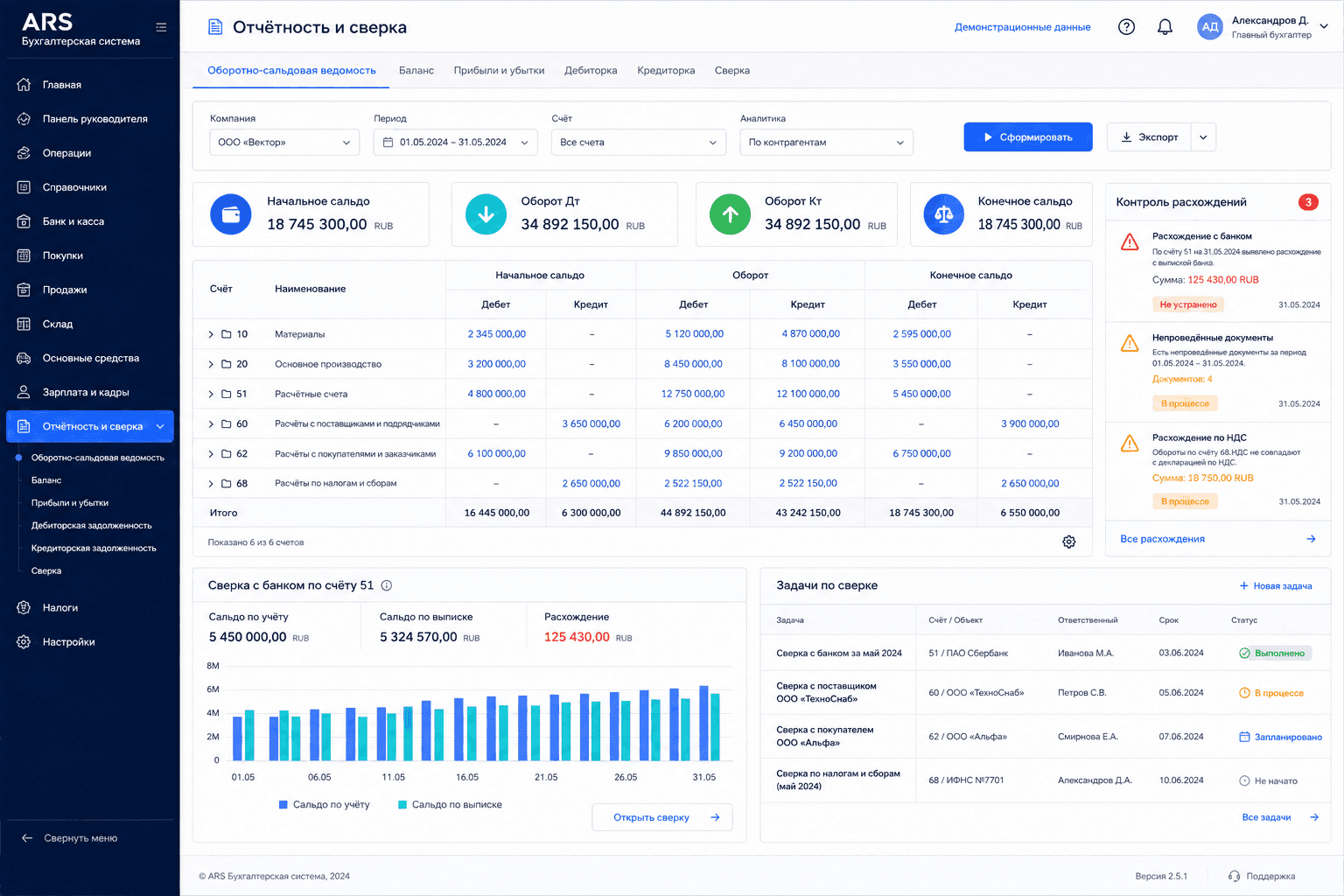
Screen of the manager and chief accountant: status of cash flows, obligations and period readiness.
Accountant's workplace: list of operations, filters and detailed card of the selected record
Control screen: balance sheet, discrepancies and reconciliation tasks.
Defining goals, studying the audience, forming requirements and setting tasks. This helps to understand what the business needs and what results are expected.
Creating the solution architecture, thinking through user scenarios, interfaces and logic. At this stage the 'framework' of the future product is formed.
Programming the server and client parts, connecting databases, integrating with external services. This is where the idea turns into a working product.
Checking functionality, performance, compatibility and security. Fixing bugs before the product reaches users.
Deploying the product (for example, publishing in stores or launching on servers), configuring the environment and starting marketing or internal processes.
Updating functionality, adapting to new business tasks, fixing bugs and keeping the product up-to-date.
 01
01 02
02 03
03 04
04 05
05 06
06 07
07 08
08 09
09 10
10 11
11 12
12 13
13 14
14 15
15 16
16 17
17 18
18 19
19We build enterprise solutions using a powerful, proven, and
versatile tech stack designed for performance, scalability, and
security. Our expertise spans

















We will propose a suitable structure and prepare the first sketch of your future project — with no obligation to start development.
You get a visual concept you can discuss with your team.

He will review your project and business objective, prepare recommendations and the first sketch.
An honest conclusion.If the solution can be improved without a full rebuild, we will tell you so.