Client and business
Namuna Development is a developer. System supports the operation of residential complexes and work of the management structure after the sale real estate.
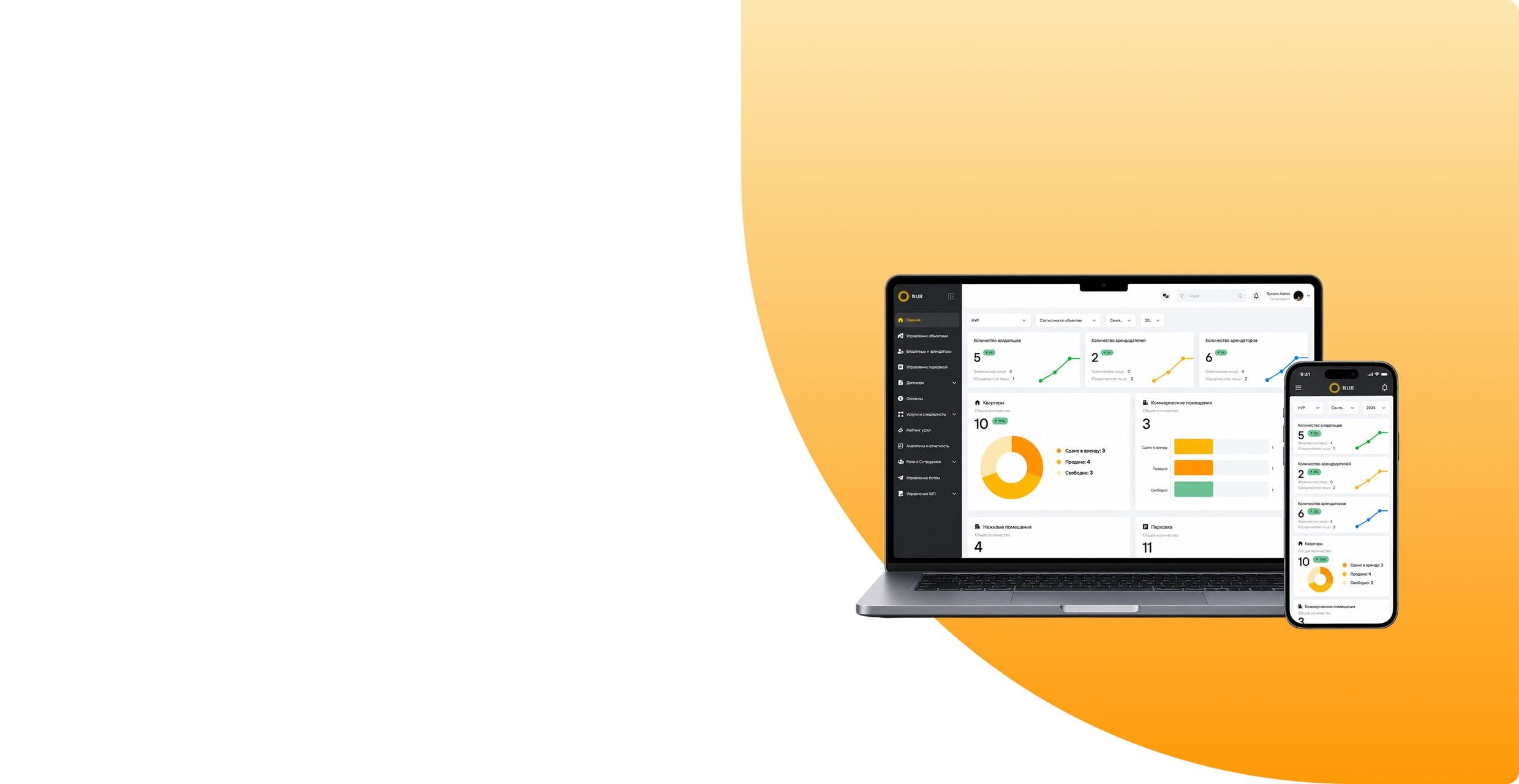
Connected properties, residents, contracts, payments, parking, services, and the Namuna mobile app within a single operational syste
Namuna Development manages residential complexes beyond the sales stage. After property handover, the company needs to manage properties, residents, contracts, charges, parking, services, requests, and access rights.
Namuna Development is a developer. System supports the operation of residential complexes and work of the management structure after the sale real estate.
Collect disparate data and transactions in one ERP model, where the object is associated with the tenant, contract, payments, parking, services and accesses.
Conducted business analysis, prepared backend-T3, UX/UI web ERP and applications, designed microservices, then developed server, web and mobile parts.
The developer received a single control loop for the operation of the residential complex, and the resident received a mobile access point to accounts, services, parking, notifications and cameras.
Developers need post-sale management of residential complexes: tracking owners and tenants, legal grounds for occupancy, premises and parking use, issued bills, outstanding debts, and ordered services.
Tell us about the project — we will break down the task and propose an implementation approach.
The project was divided into analytical, product and technical stages. This helped before I started development to record entities, connections, statuses, restrictions and scenarios of employees and tenants
We analyzed the processes of the developer and the manager structures after the sale of objects.
Described modules, entities, connections, statuses, roles, restrictions and requirements for the backend.
Linked the employee’s path in ERP with actions tenant in the mobile application Created web ERP design and applications: from dashboard to payments, services and cameras
Divided large domains into microservices and provided for an integration circuit. Implemented backend services, ERP web interface and mobile application.
Tied up payment, utility bills, cameras, notifications and access control.
We will show how to connect interfaces, business logic, data and external systems.
ERP links the real estate structure with the daily work of employees and digital services for residents.
Residential complexes, buildings, sections, floors, apartments, commercial premises. Benefit: single real estate hierarchy
Owners, tenants, documents, terms and history. Benefit: clear reason for use object.
Accounts, categories, amounts, payment methods and statuses. Benefit: Controlling obligations in context object
Location, car, contract, payment and blocking. Benefit: access rules work financially status
Catalog, application, performer, cost, payment and status. Benefit: service desk with financial accounting.
Objects, payments, notifications, services and cameras. Benefit: one channel of daily interaction
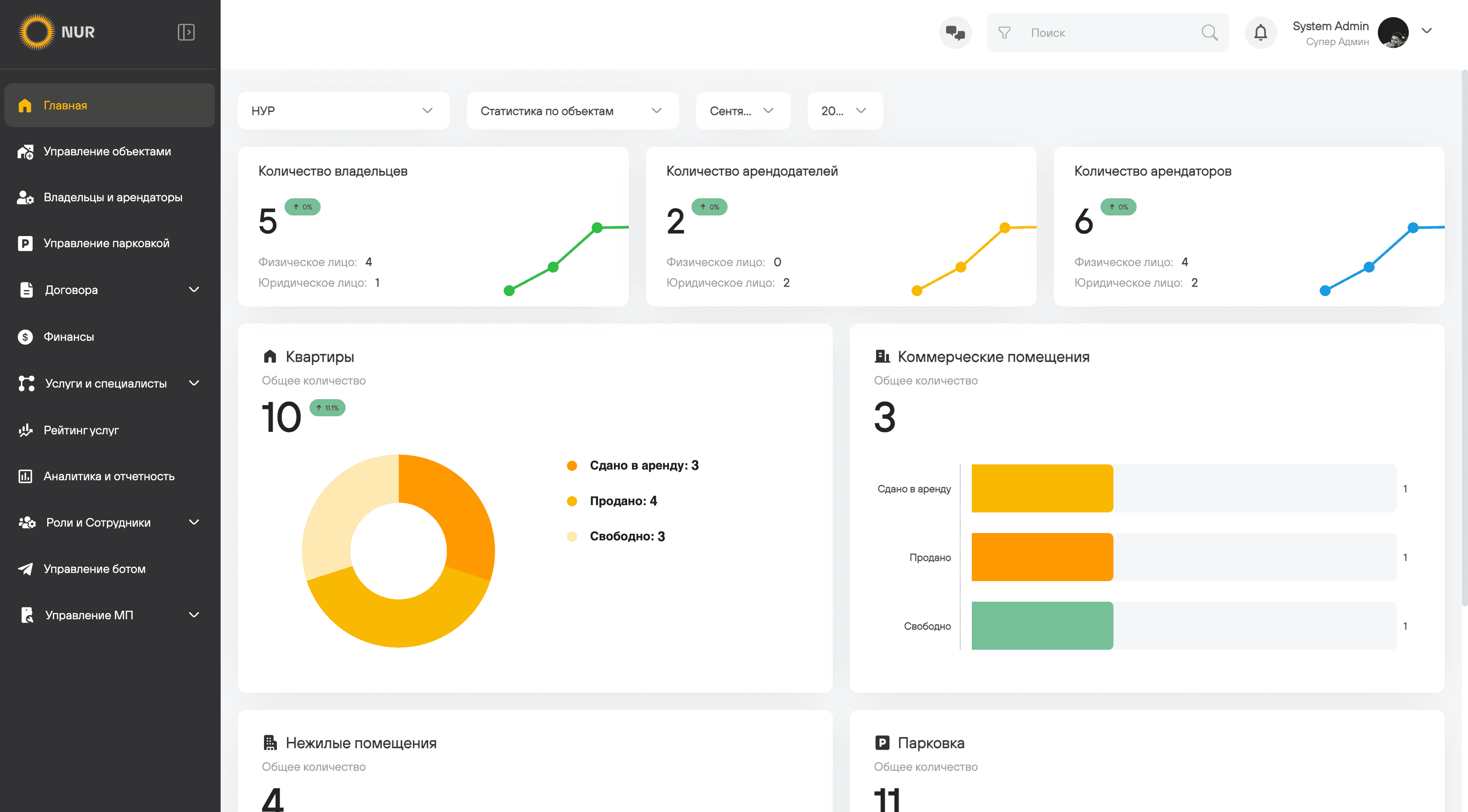
The employee selects an object and period, then sees owners, tenants, apartments, commercial premises and parking. The screen helps to quickly assess the status of the fund.
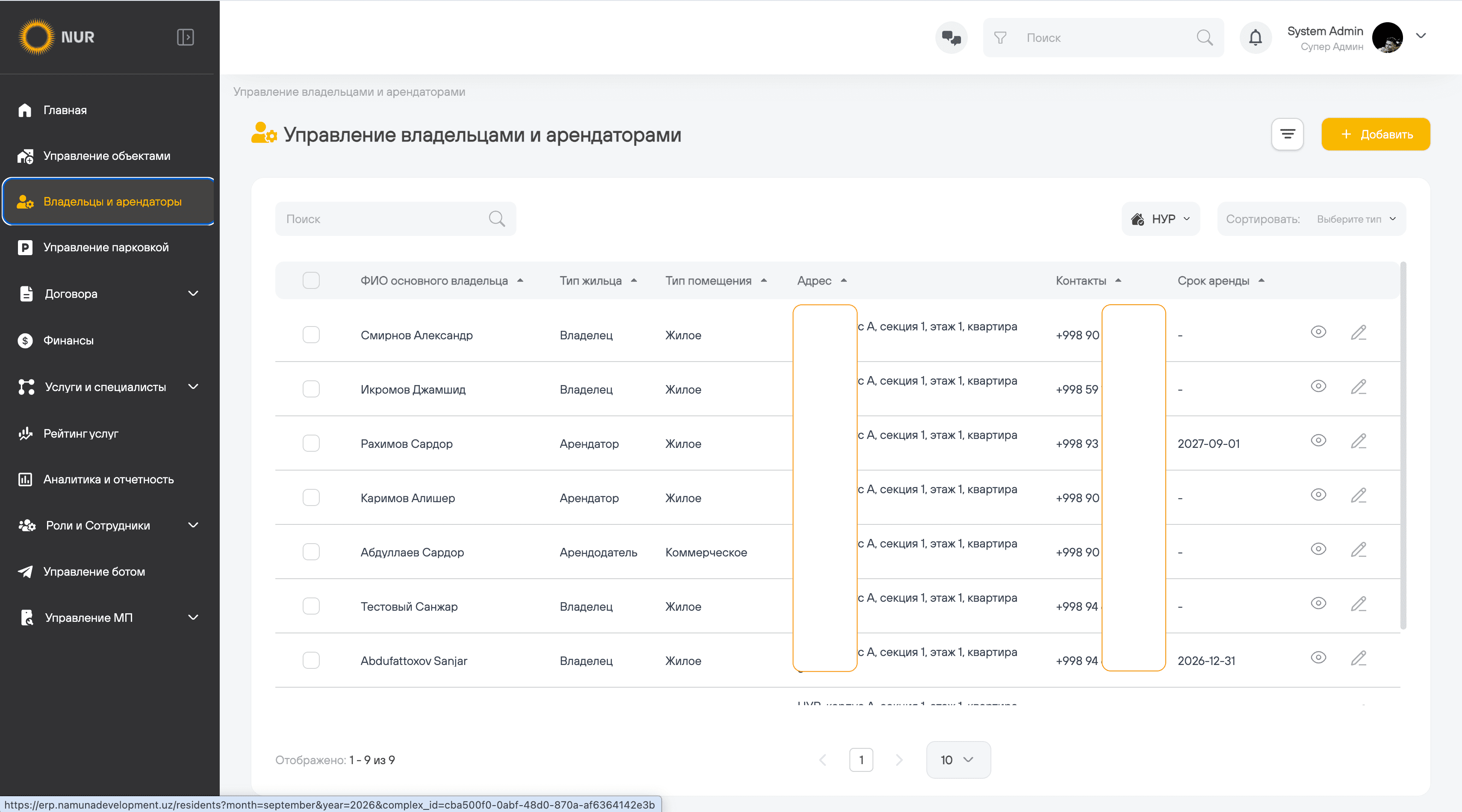
The employee searches for a tenant, filters records, sees the user type, premises, contacts and rental period. Personal information in the illustration is hidden.
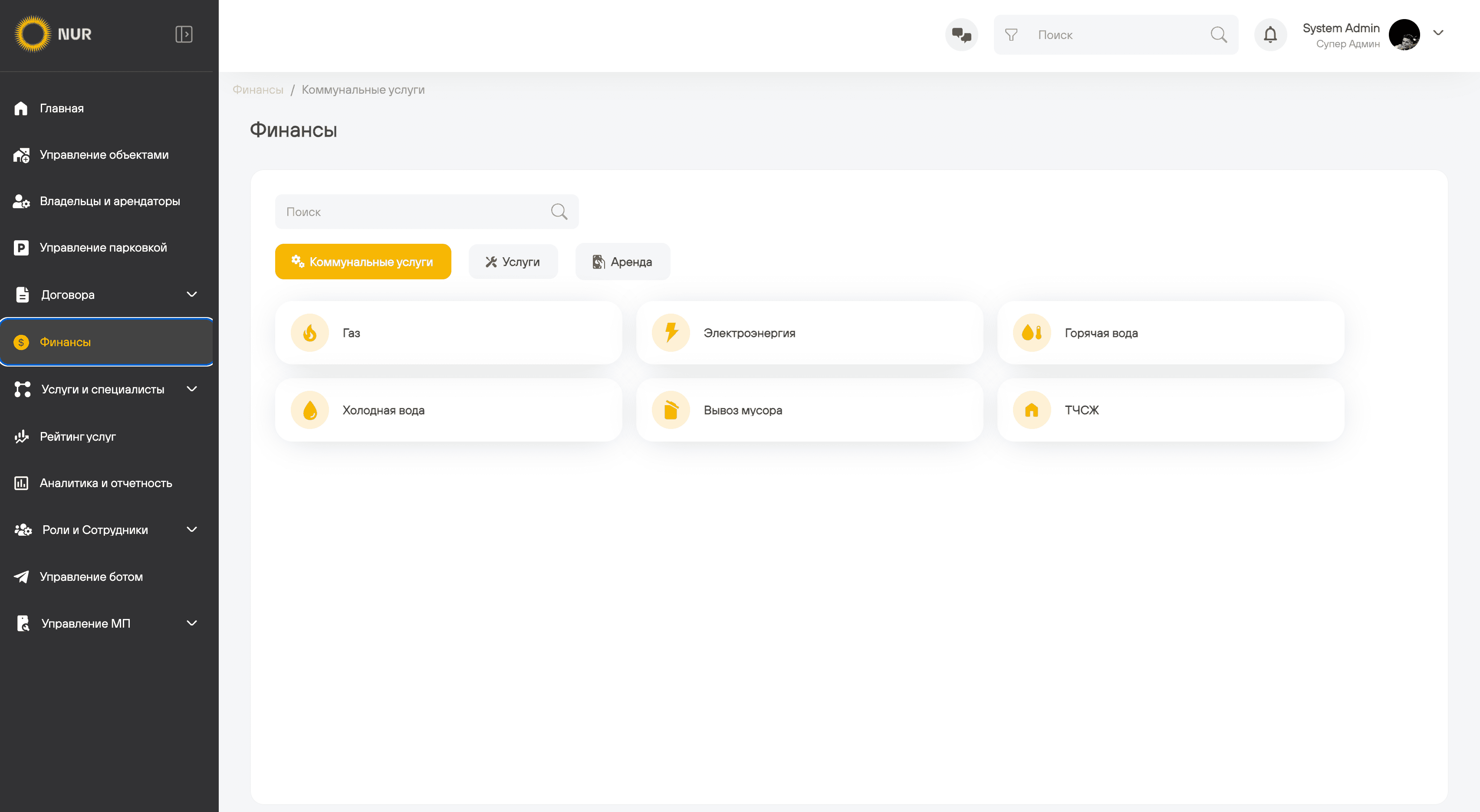
In the financial section, the employee moves between utilities, management services and rent. Categories help associate charges and payments with a specific type obligations.
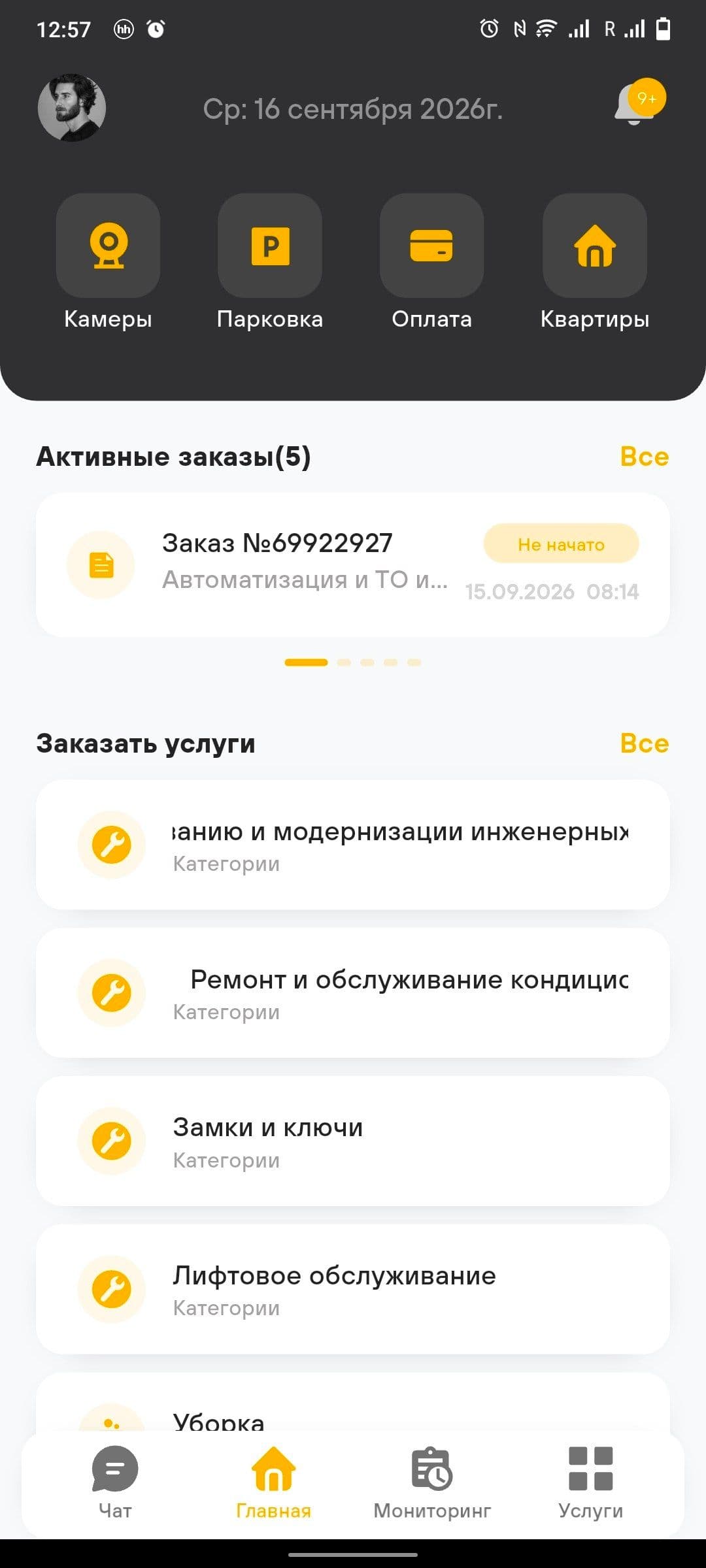
The resident sees his property, the amount to be paid, the parking status, available cameras, active service request and important reminders
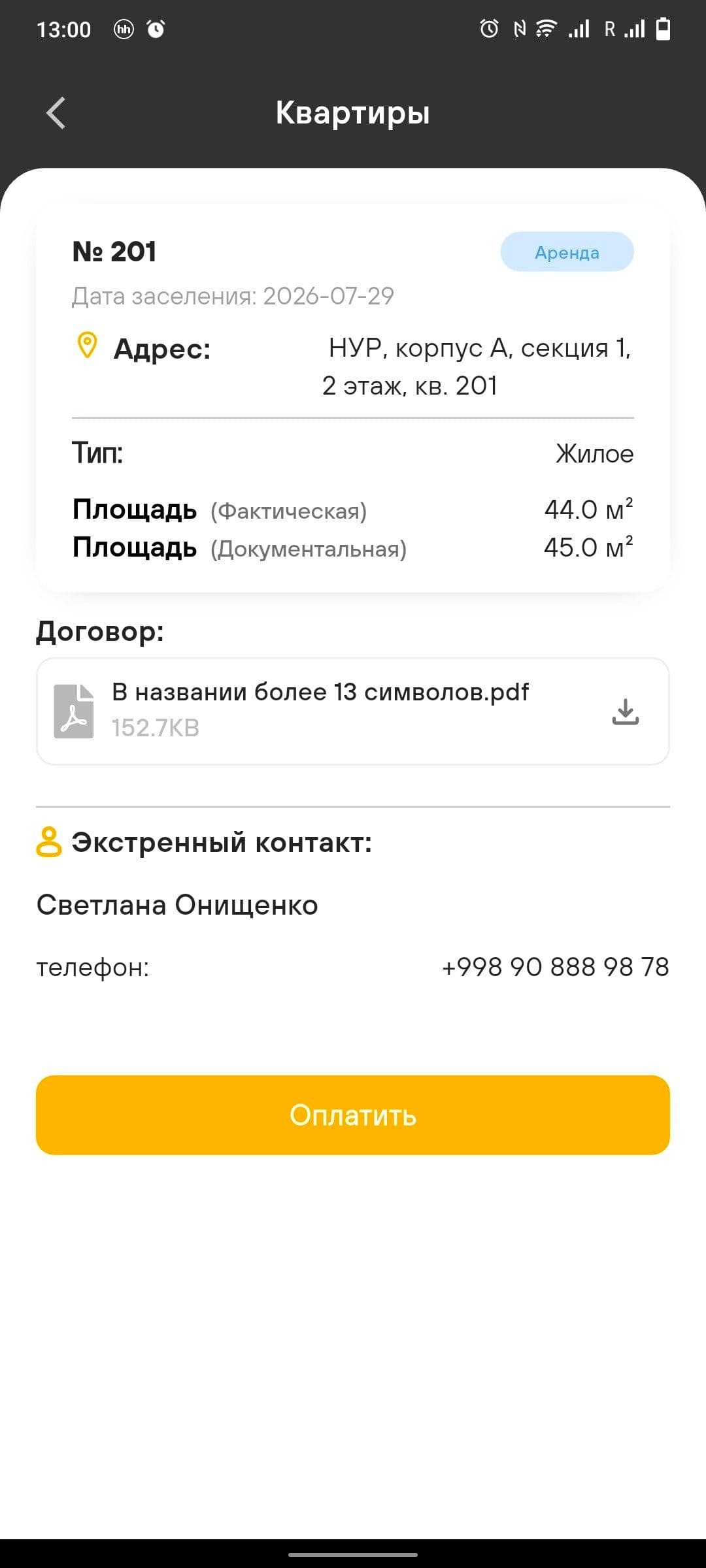
The resident sees all the information about the object
Defining goals, studying the audience, forming requirements and setting tasks. This helps to understand what the business needs and what results are expected.
Creating the solution architecture, thinking through user scenarios, interfaces and logic. At this stage the 'framework' of the future product is formed.
Programming the server and client parts, connecting databases, integrating with external services. This is where the idea turns into a working product.
Checking functionality, performance, compatibility and security. Fixing bugs before the product reaches users.
Deploying the product (for example, publishing in stores or launching on servers), configuring the environment and starting marketing or internal processes.
Updating functionality, adapting to new business tasks, fixing bugs and keeping the product up-to-date.
Integrations work within a script, not as a separate list
Accepts invoice payments and returns to ERP the result of the operation, amount, date and method of payment.
Gives the tenant another payment method in the application and updates the account status after confirmation.
Links the application with utility payments services and corresponding categories accruals
Supports bank payment of obligations tenant and transfer of the result to the financial module.
Gets the parking obligation status and blocks access if outstanding debt.
Transmits applications, payment commands and actions resident to the common server circuit ER
ERP brought together the operation of residential complexes into a connected model. Now the object can considered not as a line in the register, but as a context for the tenant, agreement, charges, parking, services, notifications and activity history.
Accounts and debts are visible in the context of a specific object and service.
The premises, user, contract, payments and operational history are connected.
Filters, reports, exports and activity history use linked ERP data.
Payment, notifications, services, parking and cameras are available in the application.
We will propose a suitable structure and prepare the first sketch of your future project — with no obligation to start development.
You get a visual concept you can discuss with your team.

He will review your project and business objective, prepare recommendations and the first sketch.
An honest conclusion.If the solution can be improved without a full rebuild, we will tell you so.