Client & Business
Online store selling home appliances
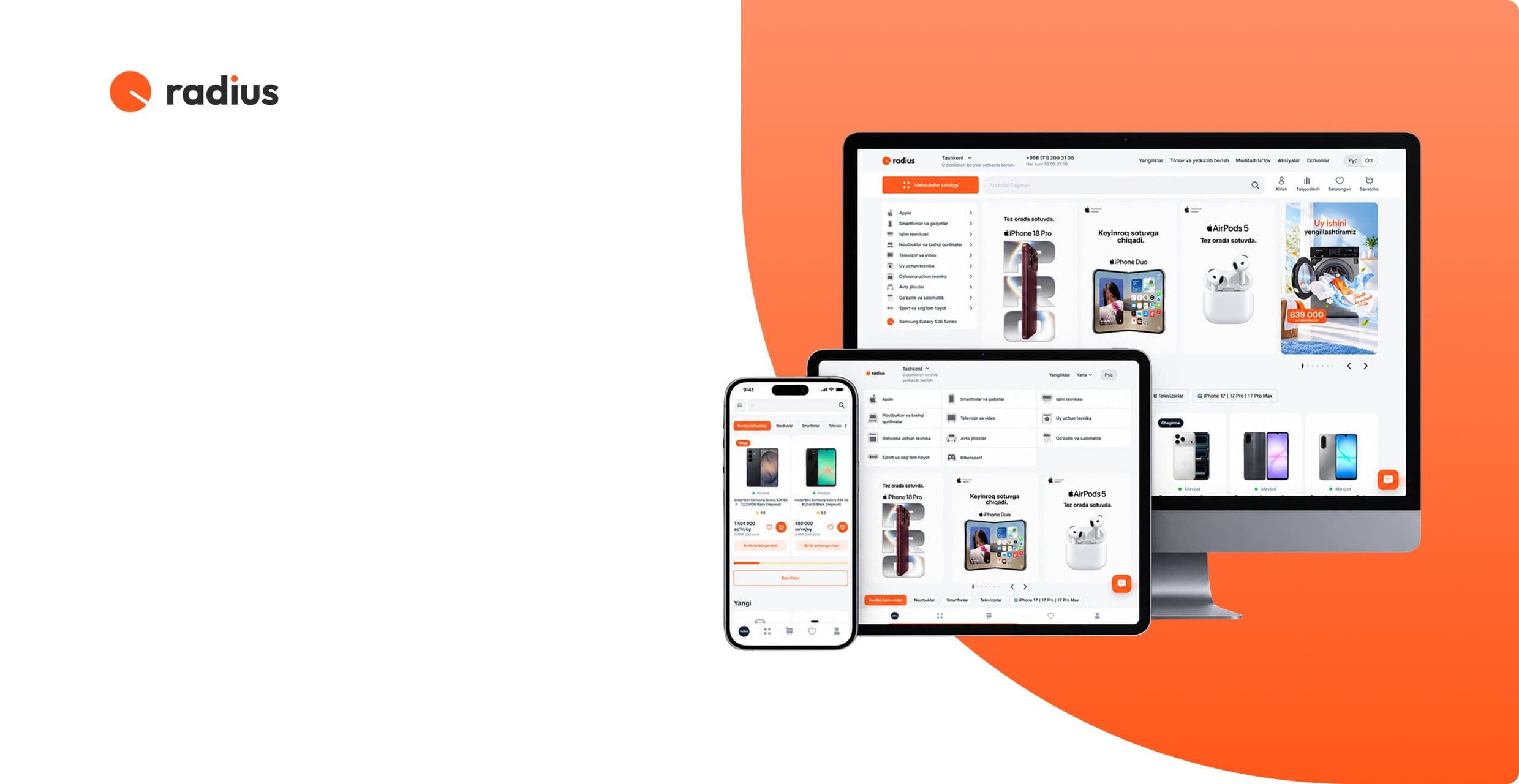
Radius sells electronics and home appliances through its website and retail stores, delivers orders across Uzbekistan, and offers installment payment options.
Radius sells electronics and home appliances through its website and retail stores, delivers orders across Uzbekistan, and offers installment payment options.
Online store selling home appliances
Update the website and administrative system without disrupting payments, installment plans, inventory, delivery, accounting, and CRM operations.
Built a responsive interface for desktop and mobile devices, configured the administrative system, migrated the product database, and implemented the required integrations.
Radius received a modern online store and a unified system for managing the product catalog and orders.
For Radius, the website is an operational part of the sales process. Customers choose products, compare specifications, check availability, place orders, and select payment or installment options. The order must then move into processing, inventory, accounting, and delivery systems.
Any error between connected systems could result in incorrect prices or stock levels, lost payment statuses, delayed order fulfillment, or incomplete data in the accounting system. That is why the project was not simply a redesign, but a modernization of the entire e-commerce ecosystem.
Tell us about the project — we will break down the task and propose an implementation approach.
We divided the work into several interconnected areas. Each one affected the overall order journey — from product selection to inventory processing and delivery.
We analyzed the customer journey and the operation of the catalog, payments, installment plans, inventory, delivery, accounting, and CRM. We identified the connections that had to remain intact during the system upgrade.
We defined how the new website, administrative system, and order management layer would operate within Radius's existing architecture.
We transformed the provided design into a responsive web interface. We implemented the catalog, search, product pages, comparison, favorites, shopping cart, and bilingual navigation.
We configured management of categories, brands, collections, product variants, orders, customers, discounts, banners, content, and translations.
We migrated the product database to the new structure while preserving relationships between products, categories, brands, variants, images, and commercial data.
Customers interact with the website, while employees work through a secure administrative system. Both interfaces use a shared catalog and order management layer. It stores the product structure, processes user actions, and transfers data to connected services.
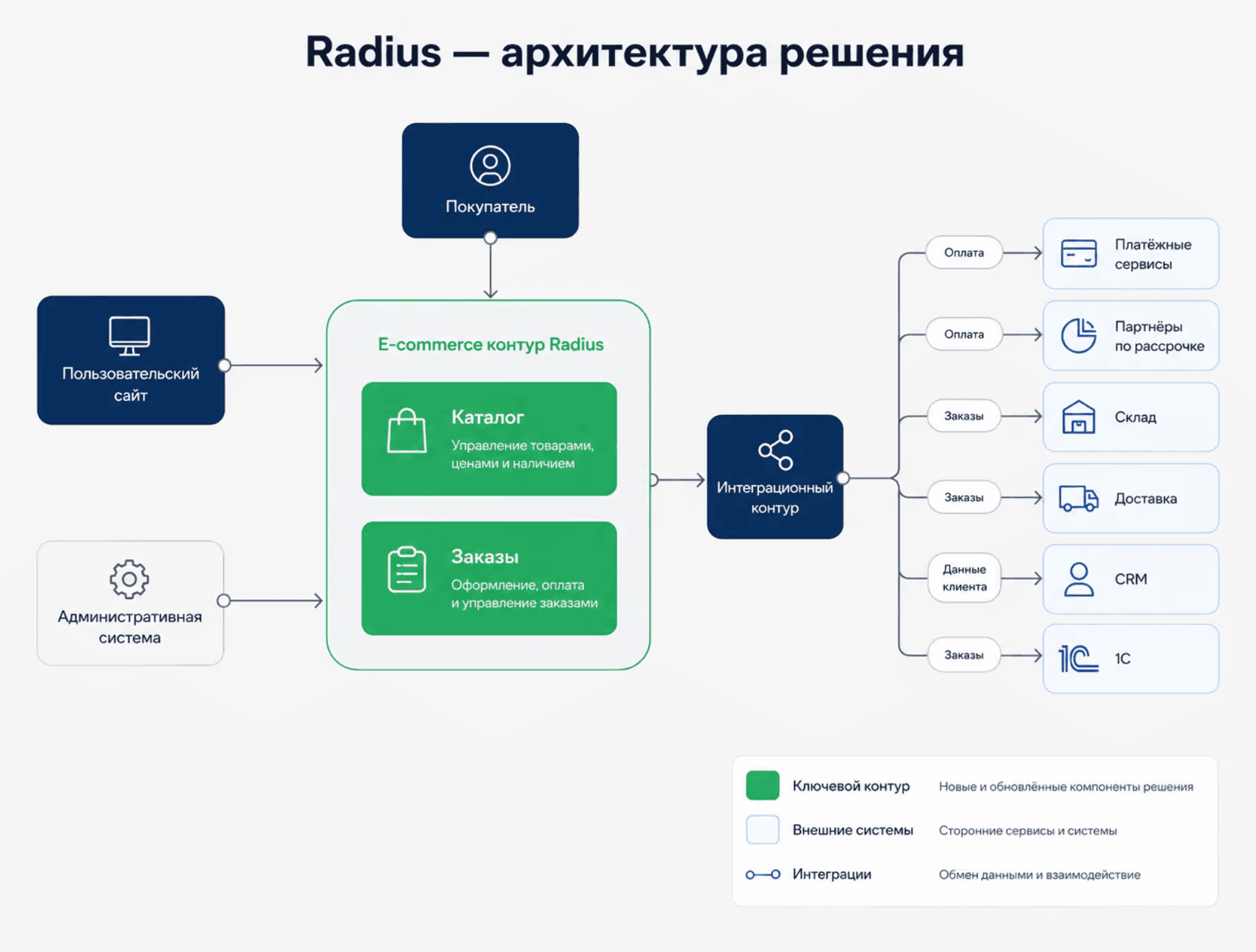
We will show how to connect interfaces, business logic, data and external systems.
The website covers the entire customer journey, from searching and comparing products to placing an order and selecting payment or installment options. Employees manage the catalog, content, and orders through the administrative system.
Categories, brands, search, and product collections help customers quickly find the right products even within a large assortment.
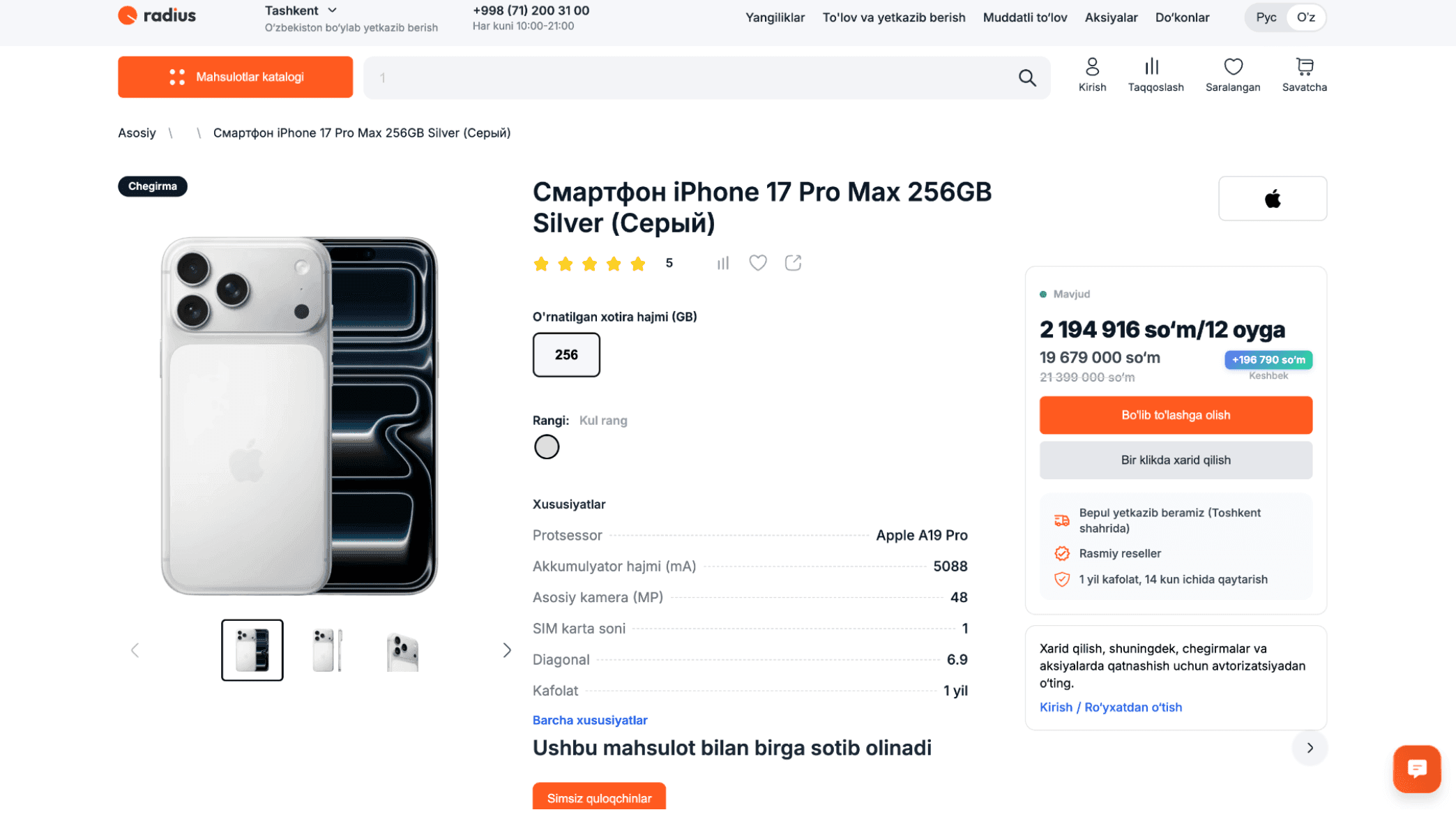
A single page brings together product images, specifications, variants, availability, price, monthly payment, and delivery terms.
Customers can compare several models, save products they like, and return to their selection later.
The customer reviews the order, enters contact details, selects a delivery option, and proceeds to payment.
At checkout, customers can choose from six payment methods and installment options through Iman, Uzum, and AllGood. If an installment application is not approved, the customer can select another payment
Employees manage products, categories, brands, discounts, banners, translations, and orders through the administrative system. Order data is transferred to CRM, 1C, inventory, and delivery services.
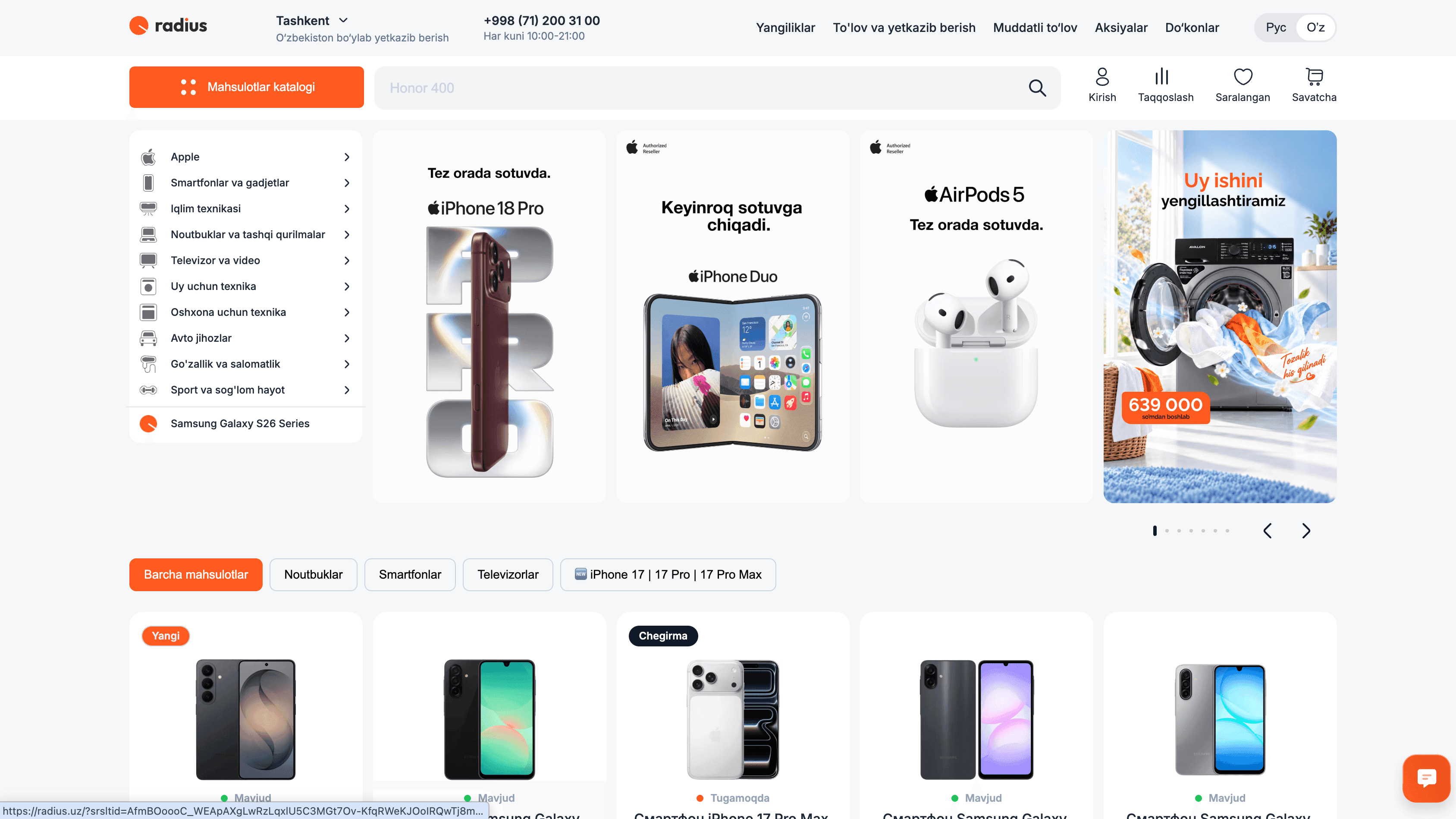
The main screen brings together the catalog, search, promotions, and product collections. Users immediately see the main categories and can navigate to products, comparisons, favorites, or the shopping cart.
A single screen contains product images, specifications, variants, availability, price, monthly payment, and delivery terms. Customers can immediately proceed with the purchase or choose an installment option.
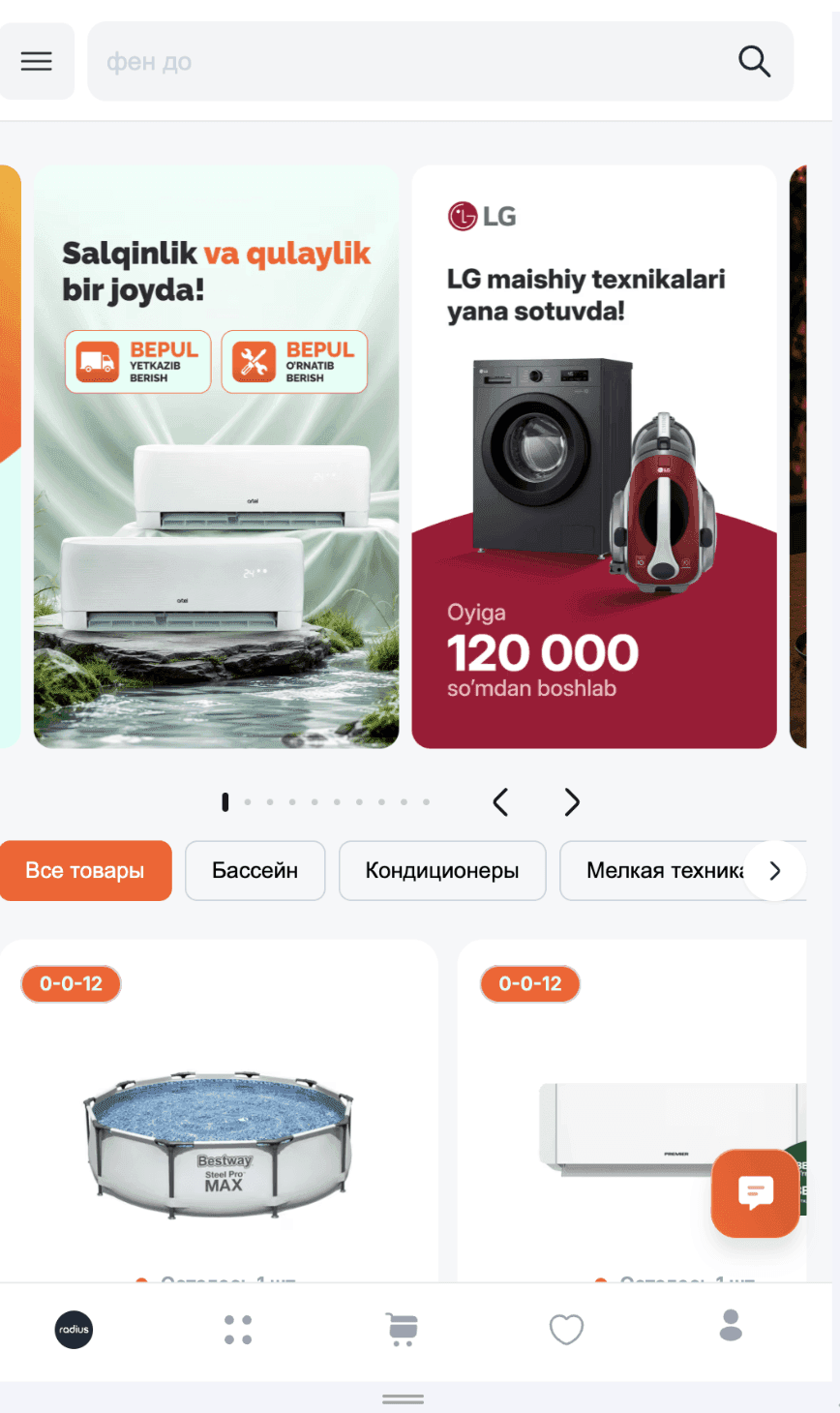
The mobile interface includes search, categories, banners, product cards, favorites, and the shopping cart. Customers can complete the entire purchase journey from a smartphone without a separate mobile app.
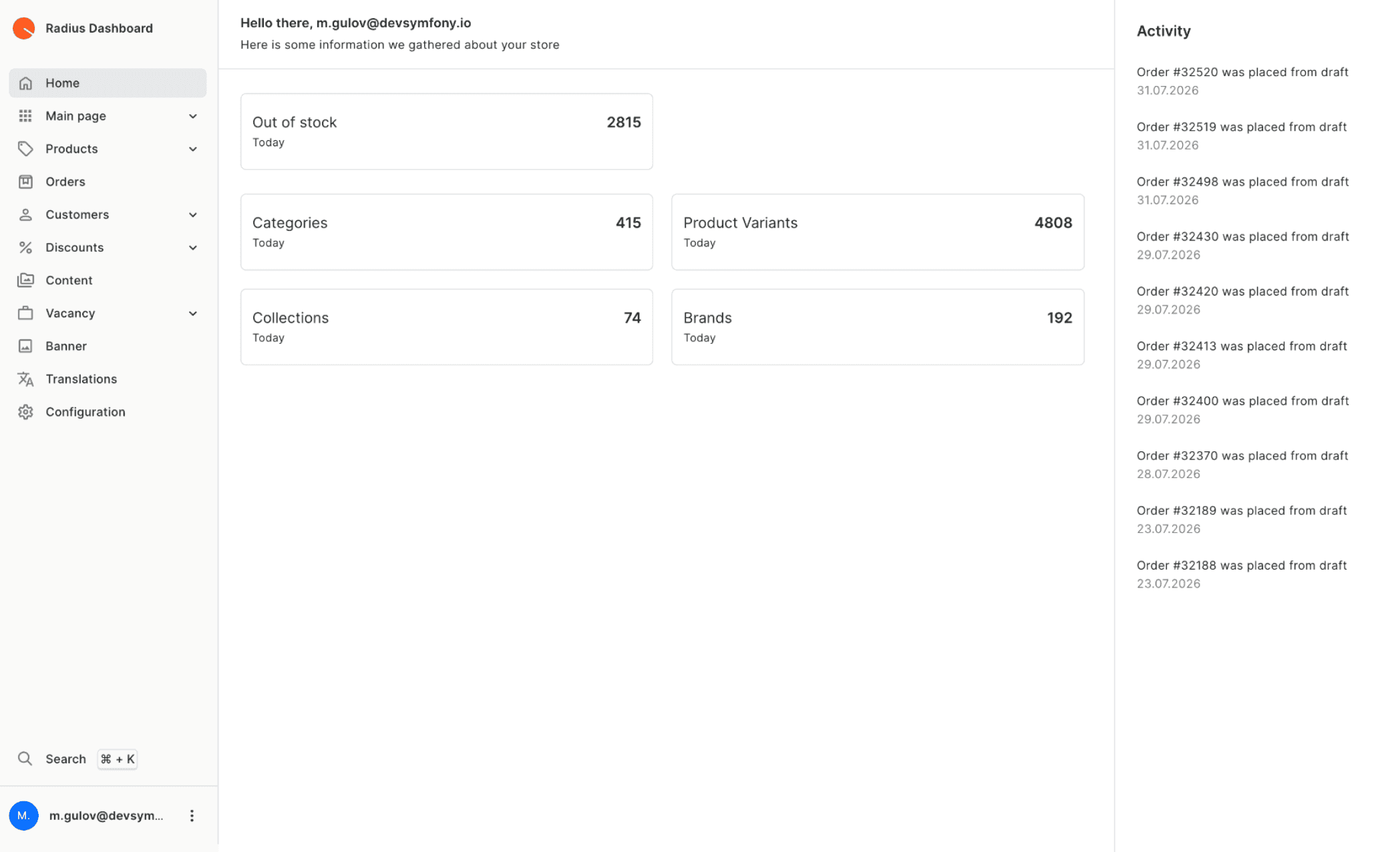
On the main dashboard, employees can view catalog data and recent order activity. Products, orders, customers, discounts, banners, content, translations, and settings are available from the sidebar menu.
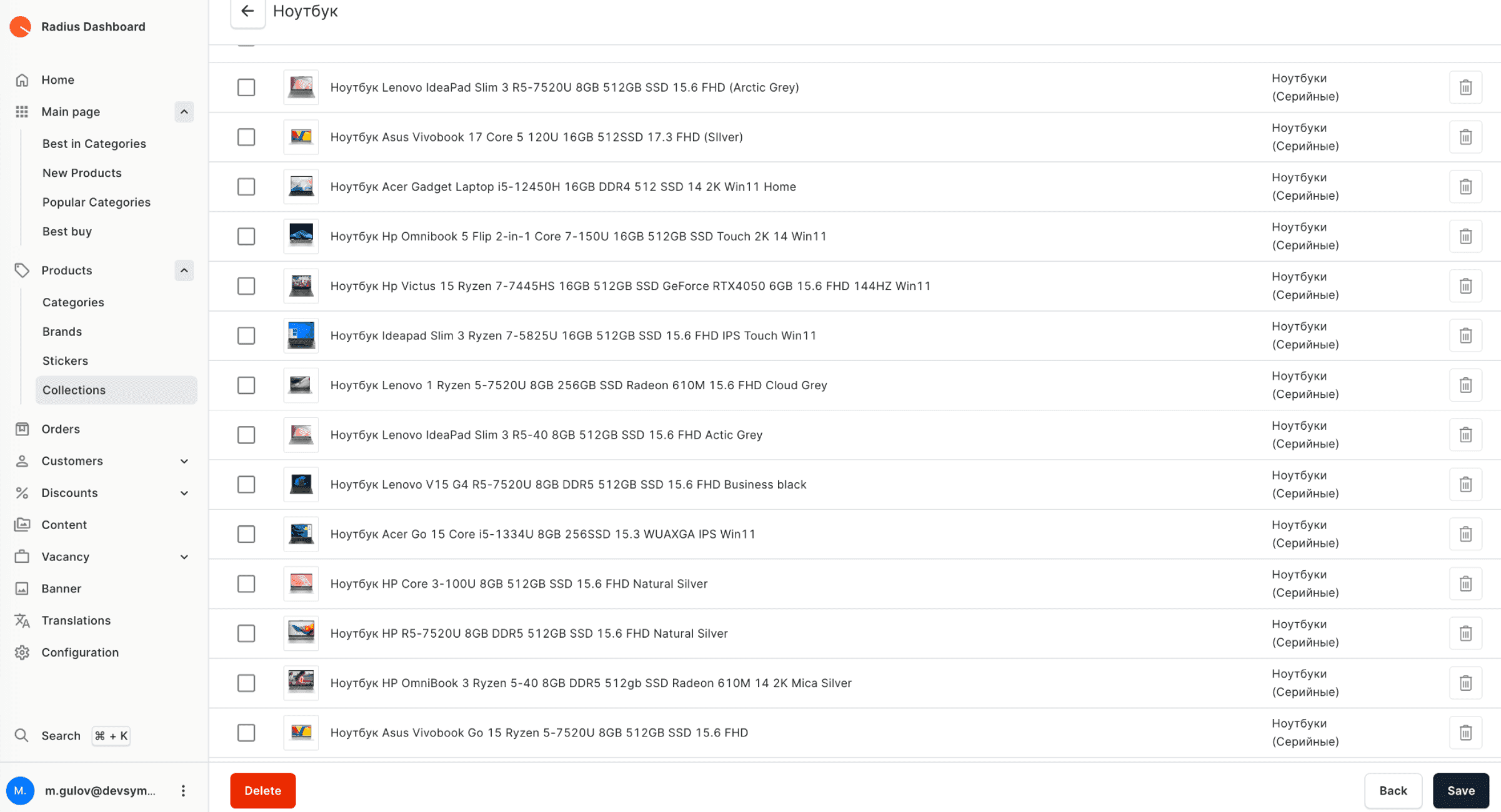
Employees can view products within a selected collection, change its contents, and save the result. This allows commercial sections of the website to be updated without manually editing pages.
We will analyse the functionality and build a clear interface structure.
Defining goals, studying the audience, forming requirements and setting tasks. This helps to understand what the business needs and what results are expected.
Creating the solution architecture, thinking through user scenarios, interfaces and logic. At this stage the 'framework' of the future product is formed.
Programming the server and client parts, connecting databases, integrating with external services. This is where the idea turns into a working product.
Checking functionality, performance, compatibility and security. Fixing bugs before the product reaches users.
Deploying the product (for example, publishing in stores or launching on servers), configuring the environment and starting marketing or internal processes.
Updating functionality, adapting to new business tasks, fixing bugs and keeping the product up-to-date.
Instead of disconnected screens and services, Radius received an integrated e-commerce ecosystem supporting both the customer journey and internal operations.
The catalog, product pages, comparison, favorites, cart, payments, and installment options all work within one responsive interface across desktop and mobile devices.
Employees manage products, categories, brands, collections, orders, customers, discounts, content, and translations through a single administrative system.
The new components were integrated into the existing ecosystem and connected with inventory, delivery, accounting, and CRM without completely replacing the internal systems.
Categories, brands, products, variants, and commercial content were migrated to the new management structure.
 01
01 02
02 03
03 04
04 05
05 06
06 07
07 08
08 09
09 10
10 11
11 12
12 13
13 14
14 15
15 16
16 17
17 18
18 19
19We build enterprise solutions using a powerful, proven, and
versatile tech stack designed for performance, scalability, and
security. Our expertise spans




















We will propose a suitable structure and prepare the first sketch of your future project — with no obligation to start development.
You get a visual concept you can discuss with your team.

He will review your project and business objective, prepare recommendations and the first sketch.
An honest conclusion.If the solution can be improved without a full rebuild, we will tell you so.